

Unistellar · France
Unistellar eQuinox 2
A 114 mm Newtonian with enhanced vision: a mirror telescope, with no eyepiece. The image builds on the phone, minute after minute.
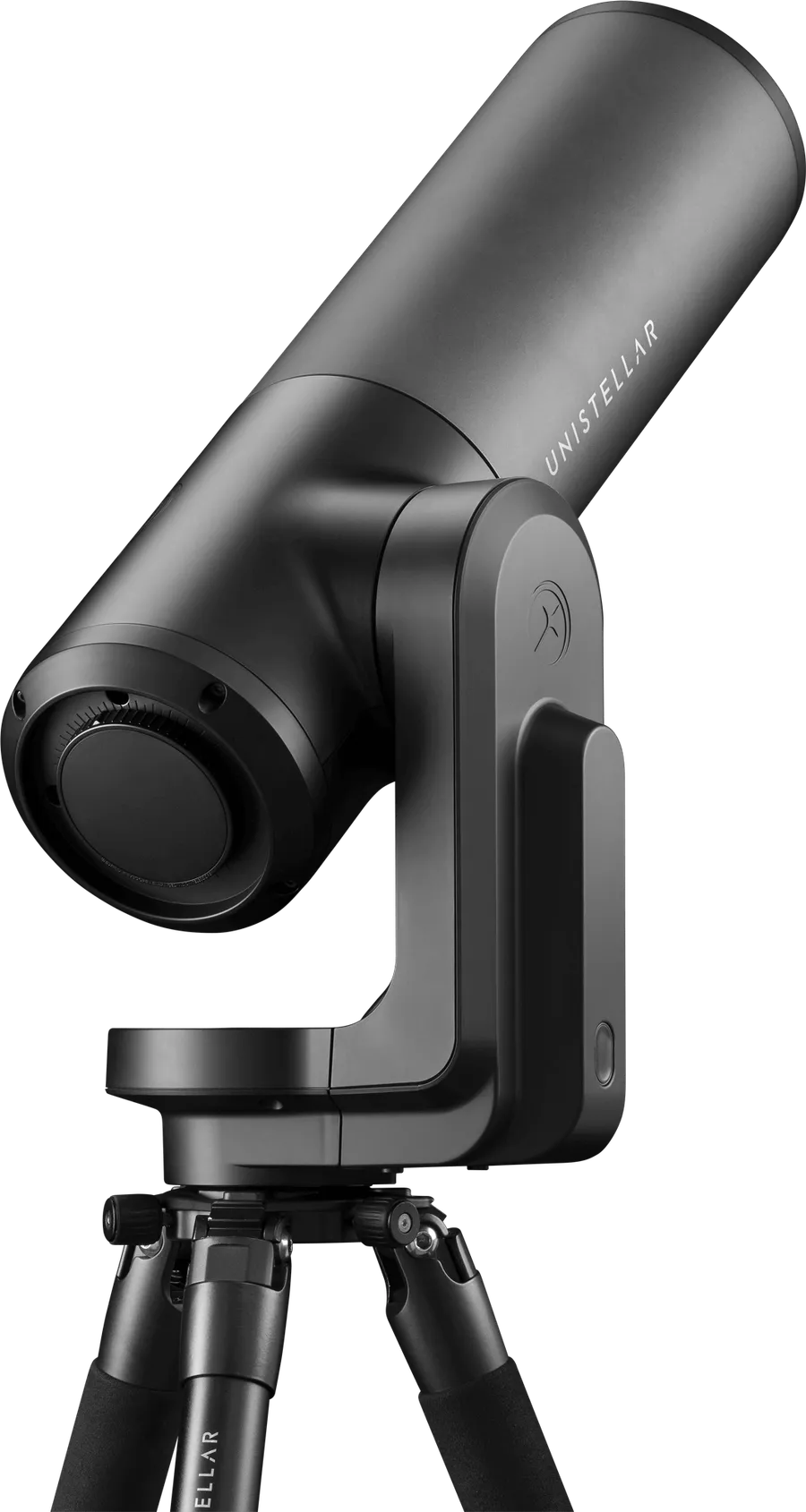
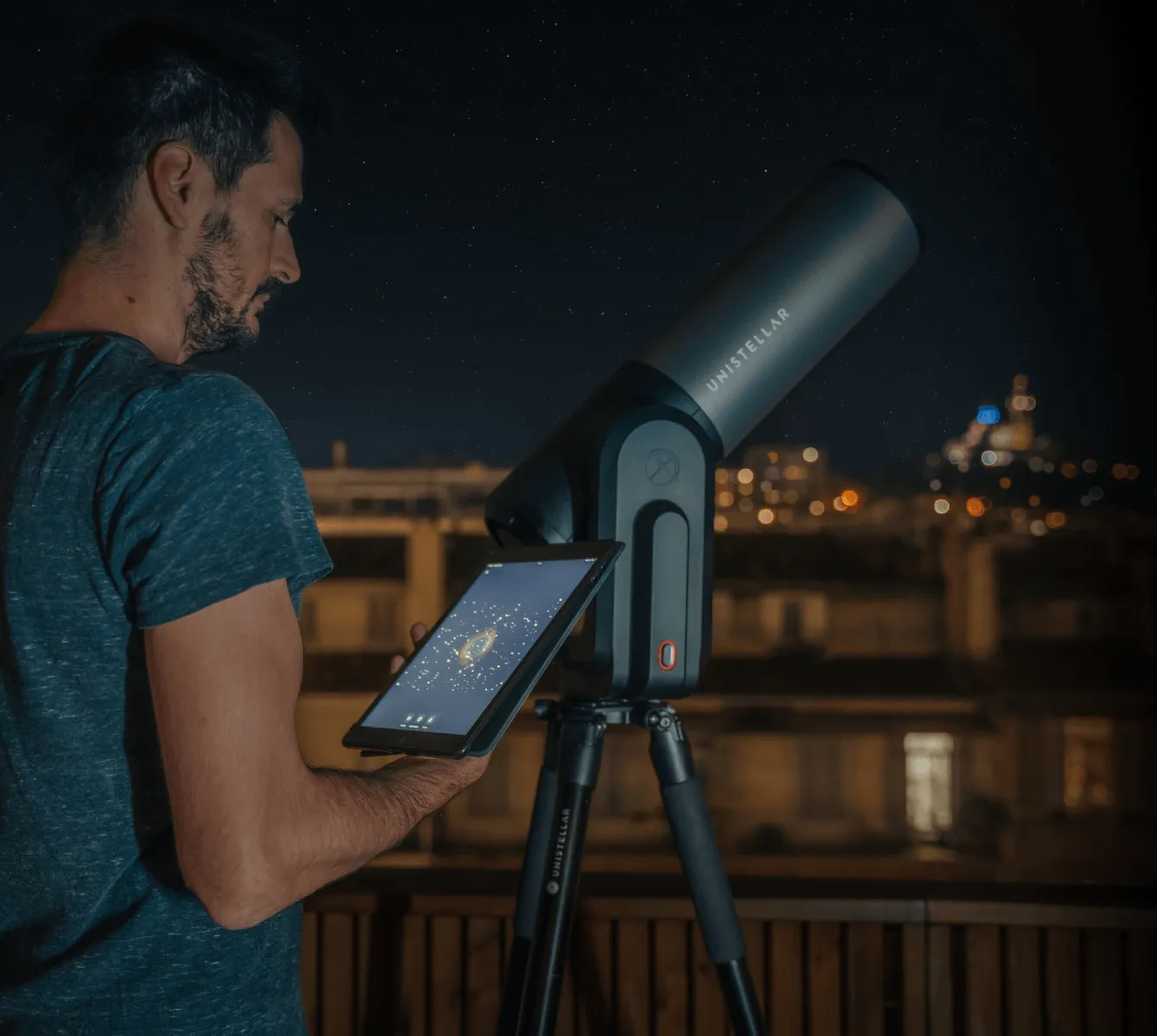
At three-quarters on its tripod, tube raised
≈ €2,599
List price recorded in 2026, excluding promotions and accessories. It is not an offer. The price offered to you arrives in writing.
This device can be ordered from me. No basket and no online payment: the price, the lead time and availability arrive in writing.
The device photographs are the manufacturers' official images. UST is an authorised reseller for all five brands. No image comes from a competing reseller.
recorded first hand In this catalogue: 17 shots · 4h 08m · 14 objects
4h 08m
0 towards 165h · hours I have logged with this device, this is not a rating
For the image the l'Origin makes in 1h, it takes 3h 09m here.
This equivalence says nothing but speed. It says nothing about resolution, about the field, or about optical quality. f/2,2 on 152 mm and f/3,9 on 114 mm do not photograph the same objects. The calculation takes nothing but the published focal ratios, with sensor, sky and target held identical.
Rapport d'ouverture : the focal length divided by the diameter, written f/, and the smaller that number, the faster the image forms.
- Aperture
- 114 mm
- Focal length
- 450 mm
- Focal ratio
- f/3.9
- Sensor
- Sony IMX347 (4.1 Mpx native)
- Resolution
- 2,880 × 2,160 px output (6.2 Mpx)
- Mount
- Motorised altazimuth
- Weight
- 9 kg
- Software
- Unistellar (iOS, Android)
- Indicative price
- ≈ €2,599
Monture azimutale : it moves in altitude and in rotation, but the field turns during the night.
The version with an eyepiece
It also exists with an eyepiece
Unistellar sells the same device under a second name, the eVscope 2. It is the only difference in the range, and it costs.
- The name of the version
- Unistellar eVscope 2
- Its price
- ≈ 4 699 €
- The difference
- 2,100 € more, that is 81% of the price of the l'eQuinox 2
What that changes. The eyepiece, and two more lines: the output resolution goes from 6.2 to 7.7 Mpx, and the quoted battery life drops from 11h to 9h. The rest of the manufacturer's table is identical: same mirror, same focal length, same field, same mount, same storage.
What this eyepiece is. A block of lenses placed in front of an OLED micro screen, and nothing more. Unistellar describes it itself as “a sophisticated lens assembly with OLED micro-display technology”, reserved for the eVscope 2 and the Odyssey Pro.
The eyepiece does not open onto the sky. It is a micro screen looked at through a block of lenses, and the image it shows comes out of the sensor, exactly like the one on the phone. No device from this brand is watched live through the glass, with or without an eyepiece.
What you pay for is comfort. 2,100 € more to put your eye to the instrument instead of looking at the phone. Not a truer image, not a deeper image: the same image, on a second screen.
Unistellar stands by the positioning of the version without an eyepiece: “It's an excellent choice if eyepiece observation is not a priority for you.”
Ask for a price for the eVscope 2 version. It has no entry here, and it does not go into the comparison: the table compares only the versions without an eyepiece.
The device
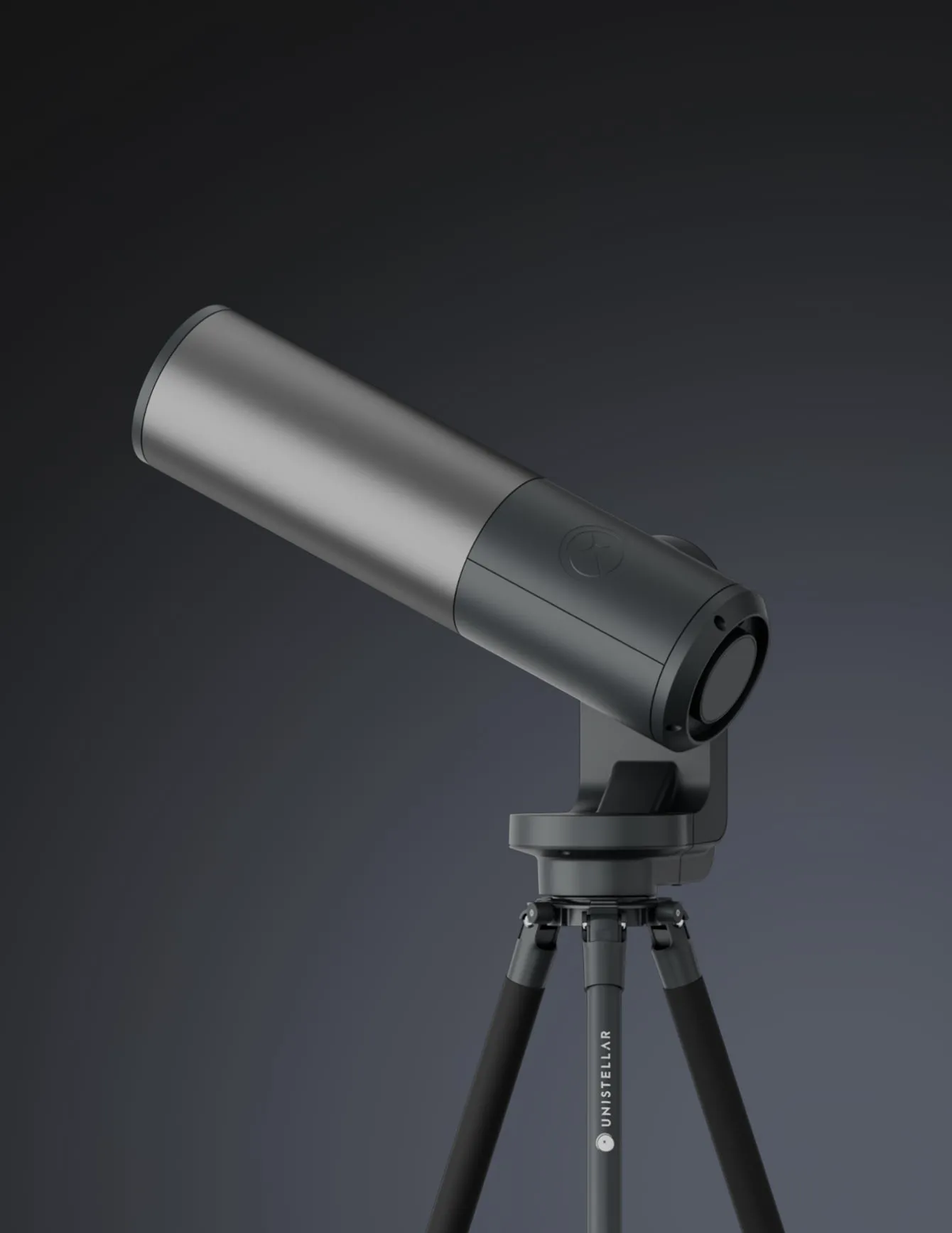
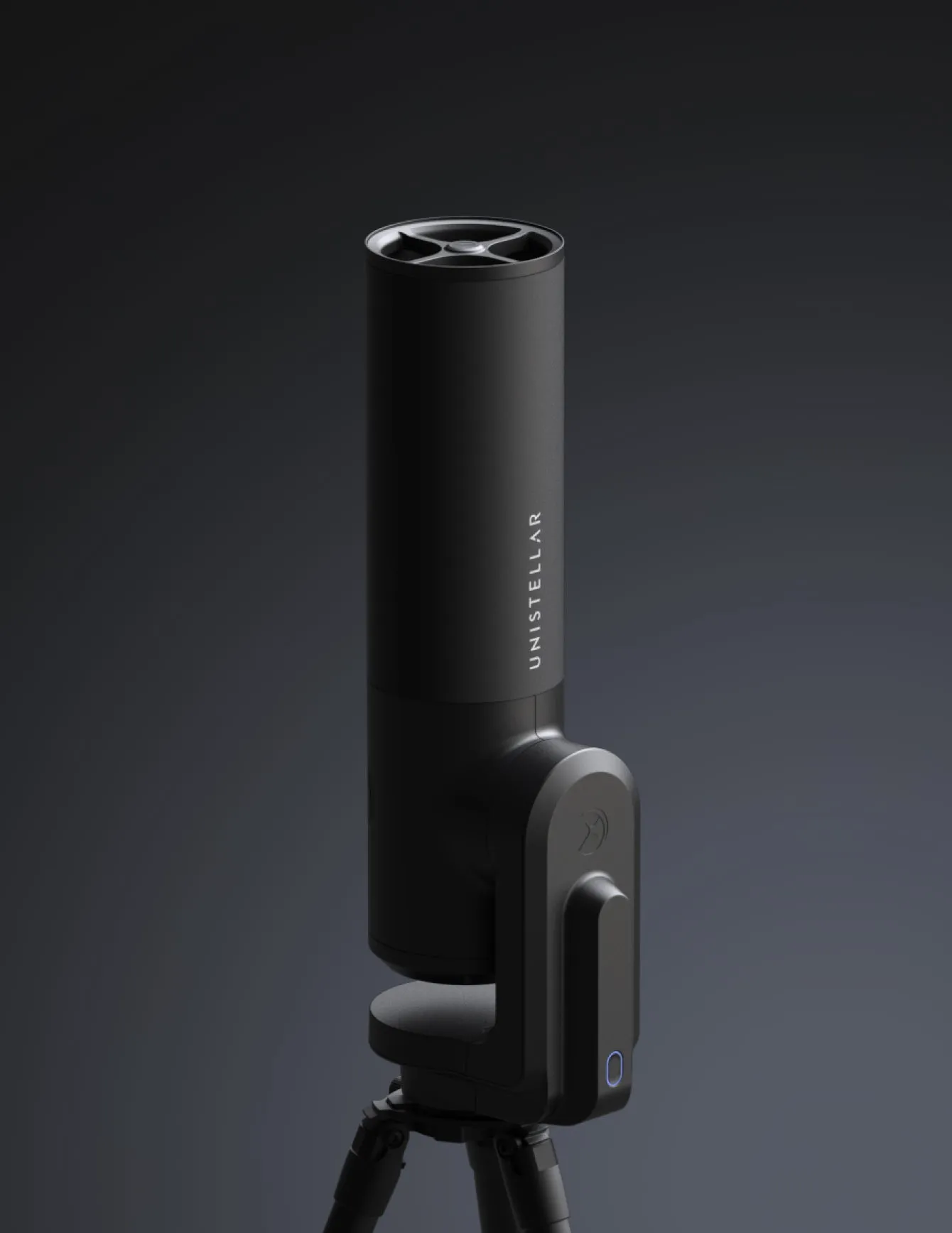
Seen from closer up
The other images published by Unistellar for this device.
Where it excels
What it does well
The faint deep sky, seen from the suburbs. And citizen science: asteroid occultations, exoplanets, comets.
Strong points
- The largest diameter after Celestron's Origin: the detail follows.
- It clears light pollution well, the halo of towns. It is the brand's founding argument.
- The observing network: the data feeds genuine scientific campaigns.
- The software has been supported without a break since the first delivery, in December 2019.
Weak points
- No dual-band filter inside. Emission nebulae, the clouds of gas that shine on their own, ask for more exposure than a DWARF 3.
- Nine kilos, plus a dedicated tripod. This is no longer a rucksack device.
- It costs more than four and a half times the price of a DWARF 3. The use, though, is much the same.
- The field is narrow, which means what you see at one go. The large nebulae do not fit in the frame.
In practice
Starting out, observing, setting up
-
01
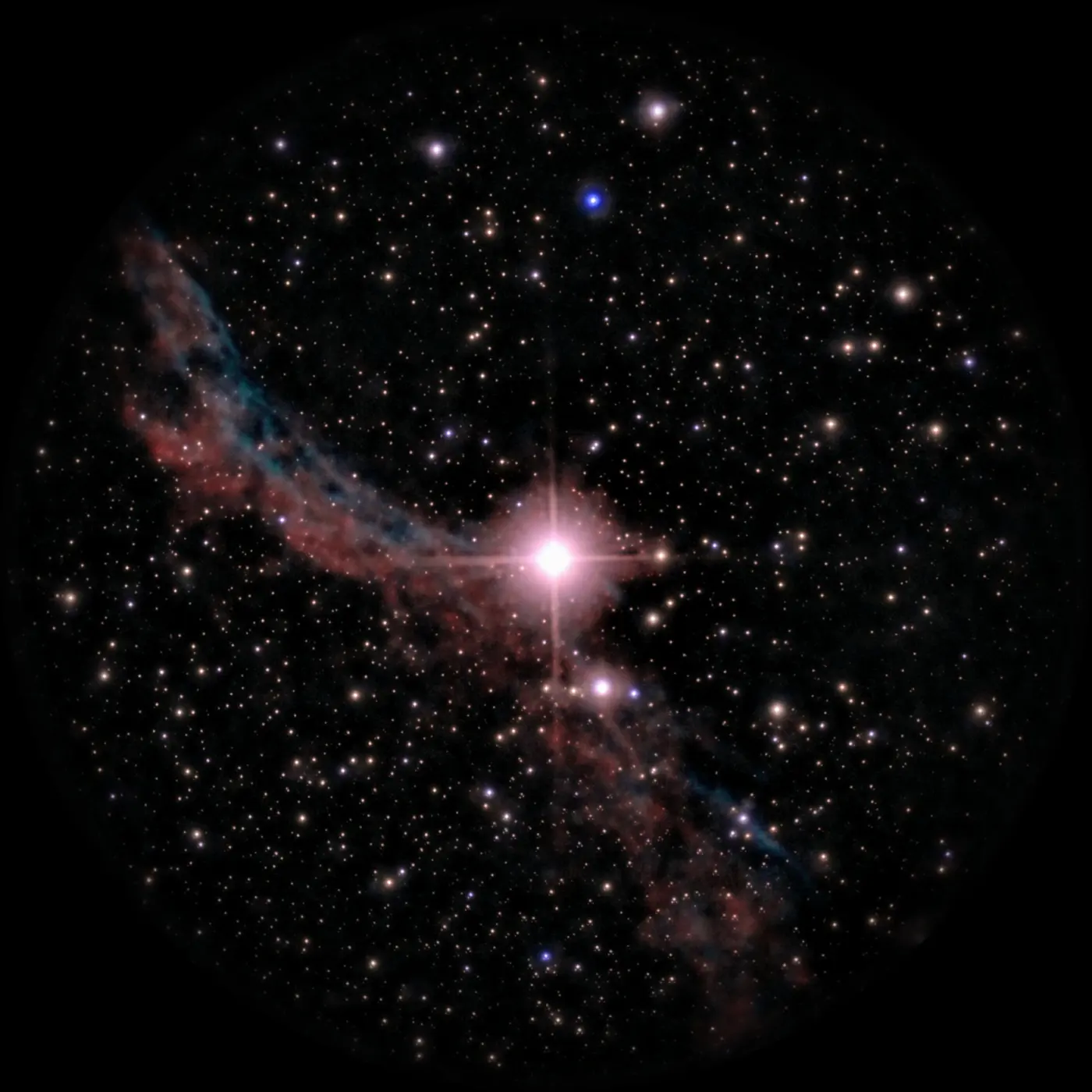
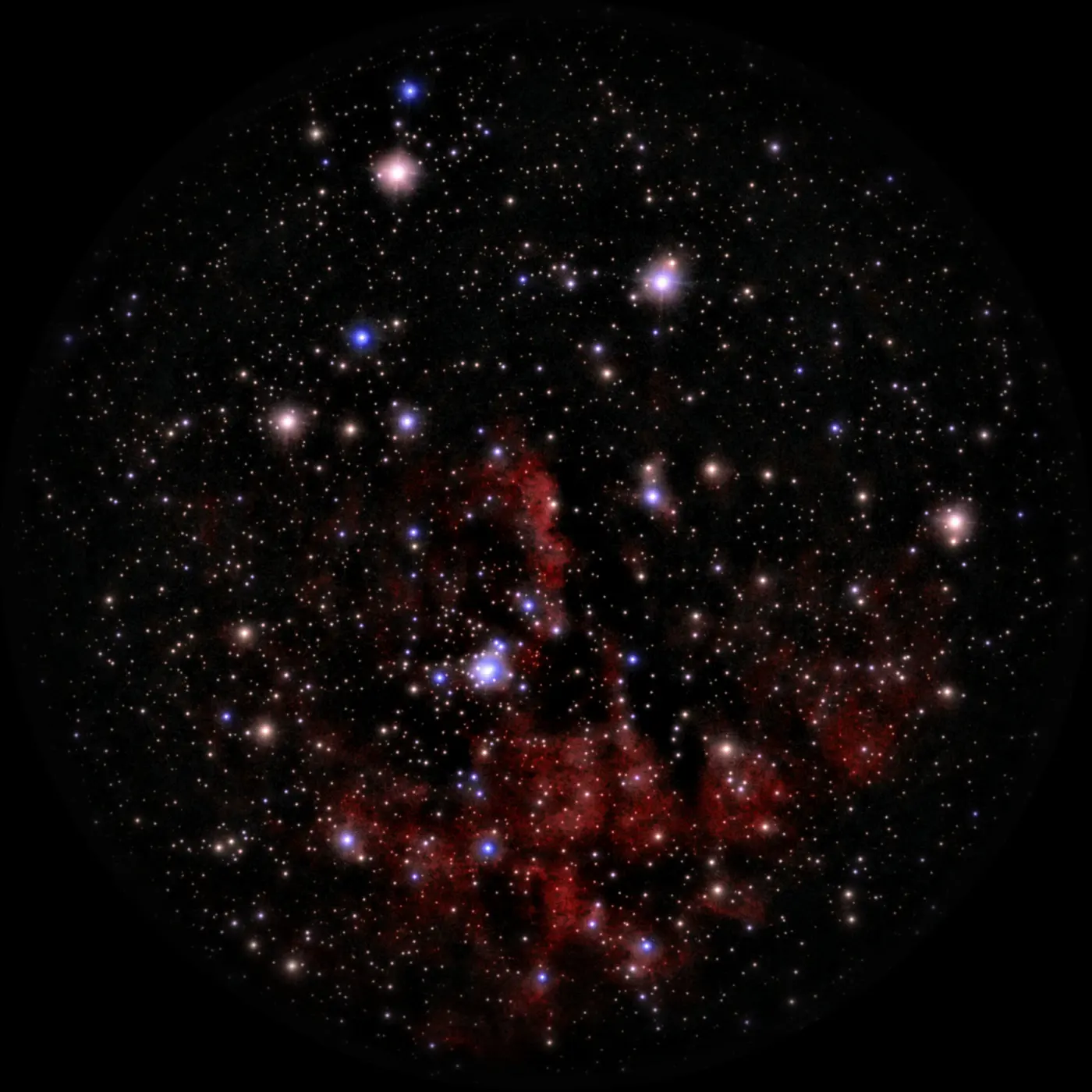
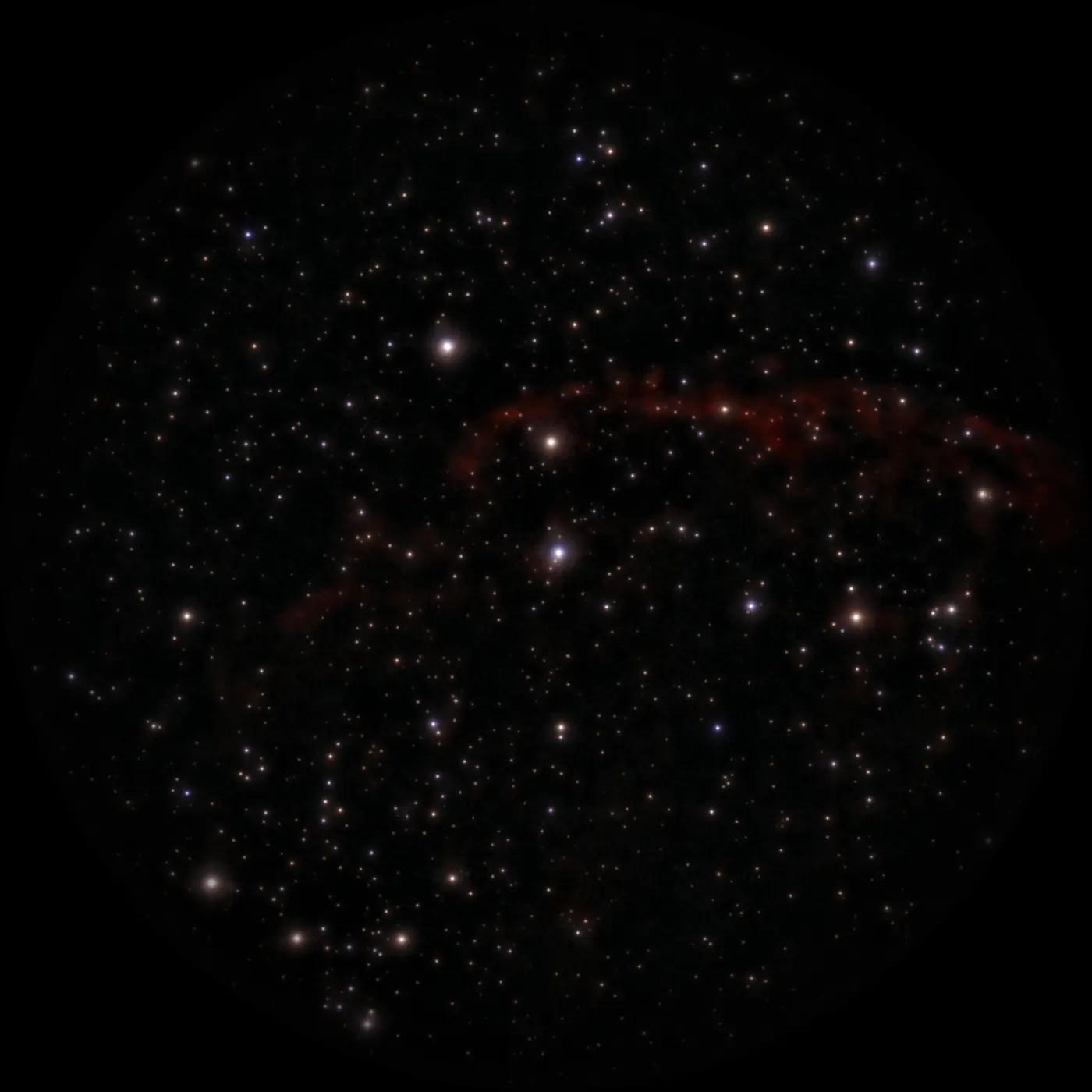
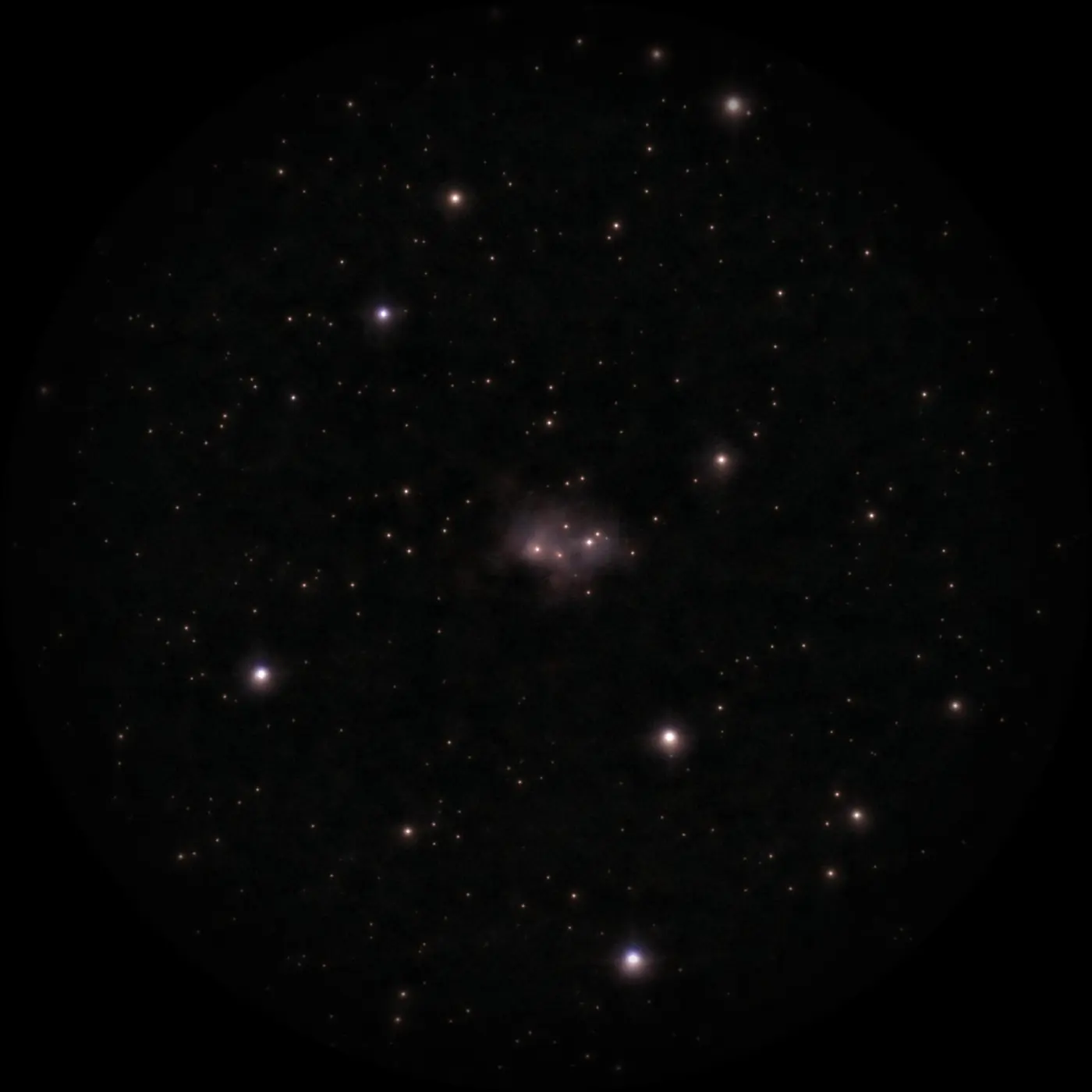
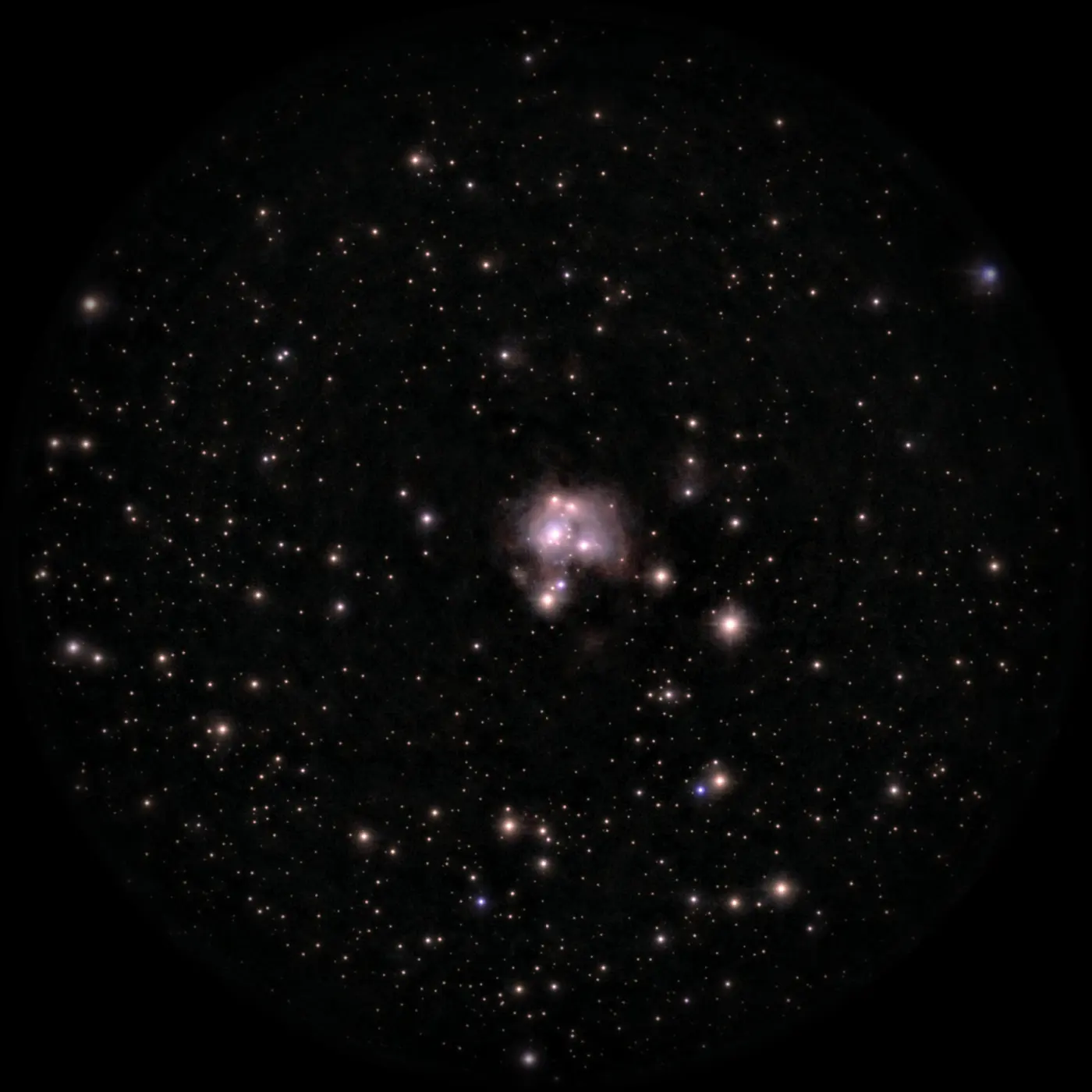
The framing is circular. The original caption takes up the arc at the bottom: allow for the space.
-
02
Under a suburban sky, reckon on 20 to 40 minutes. That is what it takes for a faint galaxy to lift out of the noise.
-
03
The device finds its own way around the sky. You do not aim: you pick the object from a list.
Images made with this device
What it really produces
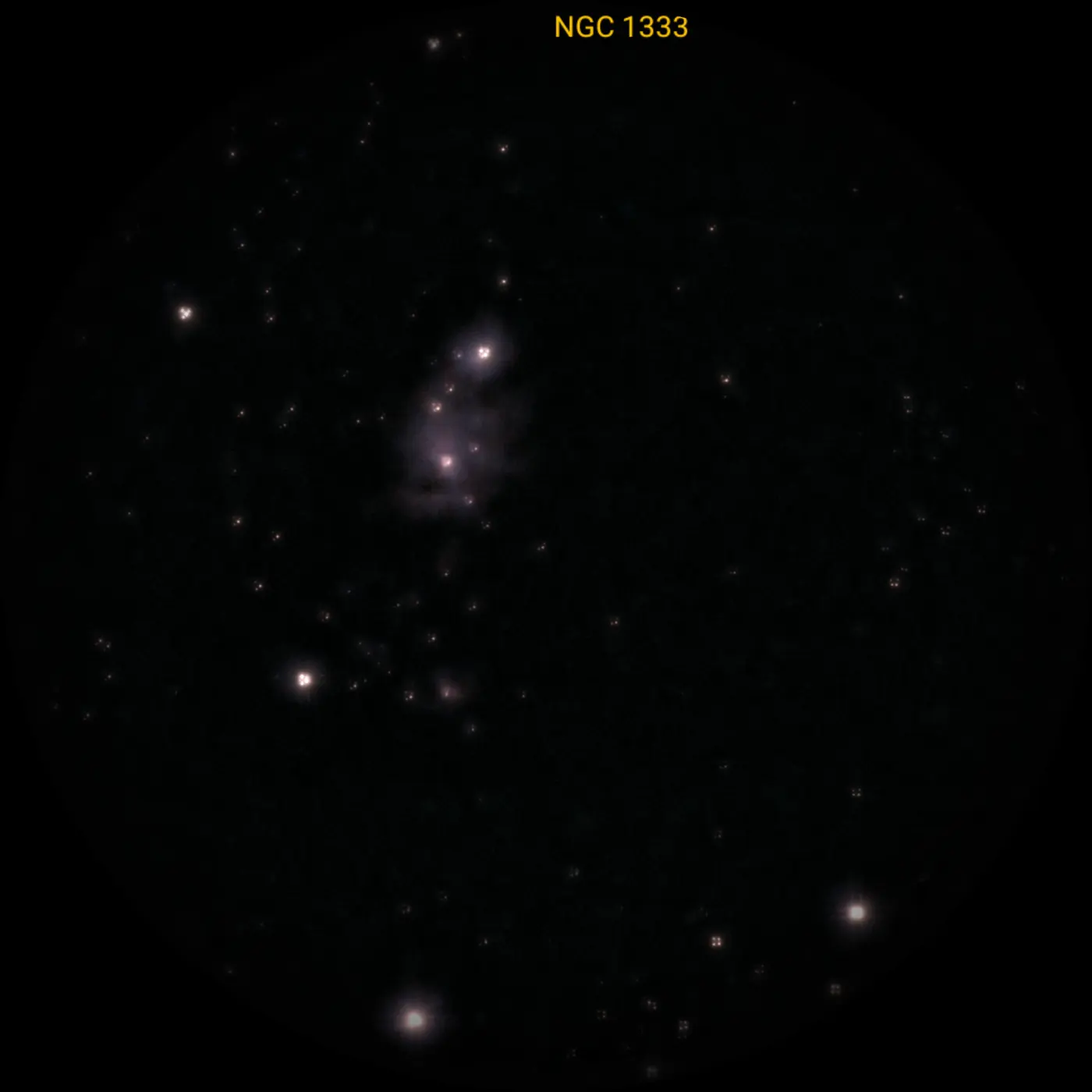
Here is what this device gave in my hands, over 4h 08m of exposure. No manufacturer image, no stock image. Each thumbnail keeps the aspect ratio of its sensor.
Compare it
Head to head with another device
Each page sets the two entries line by line and works out the differences. It writes at the top which of the two was used to make my images.
Getting hold of one
Order this eQuinox 2
≈ €2,599
Market price recorded in 2026 from the sources cited below. It is not a selling price, and it does not constitute an offer. Your price, your lead time and availability appear in the written reply.
Say what you want to photograph, and from what sky. The answer says whether this device suits. If not, it says which one suits better. Are you looking for a second-hand one, or do you have a device to trade in? Write it in the message. The answer will be straight, including when it is no.
Sources
Where these figures come from
- Planète Télescope, test eQuinox 2
- Unistellar, boutique européenne, fiche eQuinox 2
- La Clef des Étoiles, fiche produit
- Digital Camera World, annonce de l'eQuinox 2 au CES 2023
The prices are indicative and recorded in 2026. A specification wrong or out of date? Report it. The field of view and the sampling are not published here. The physical size of the sensor is not part of the project's sourced data, and those two values cannot be estimated.
Some of these sources are the pages of resellers selling the same device as me. They stay cited: that is where the figure comes from. Removing them would make this entry impossible to check. I refuse to do that.