
Celestron · United States
Celestron Origin
A 152 mm mirror working at f/2.2, in a RASA design. Image processing on board, automatic StarSense alignment. It is the only large diameter of the devices compared here.
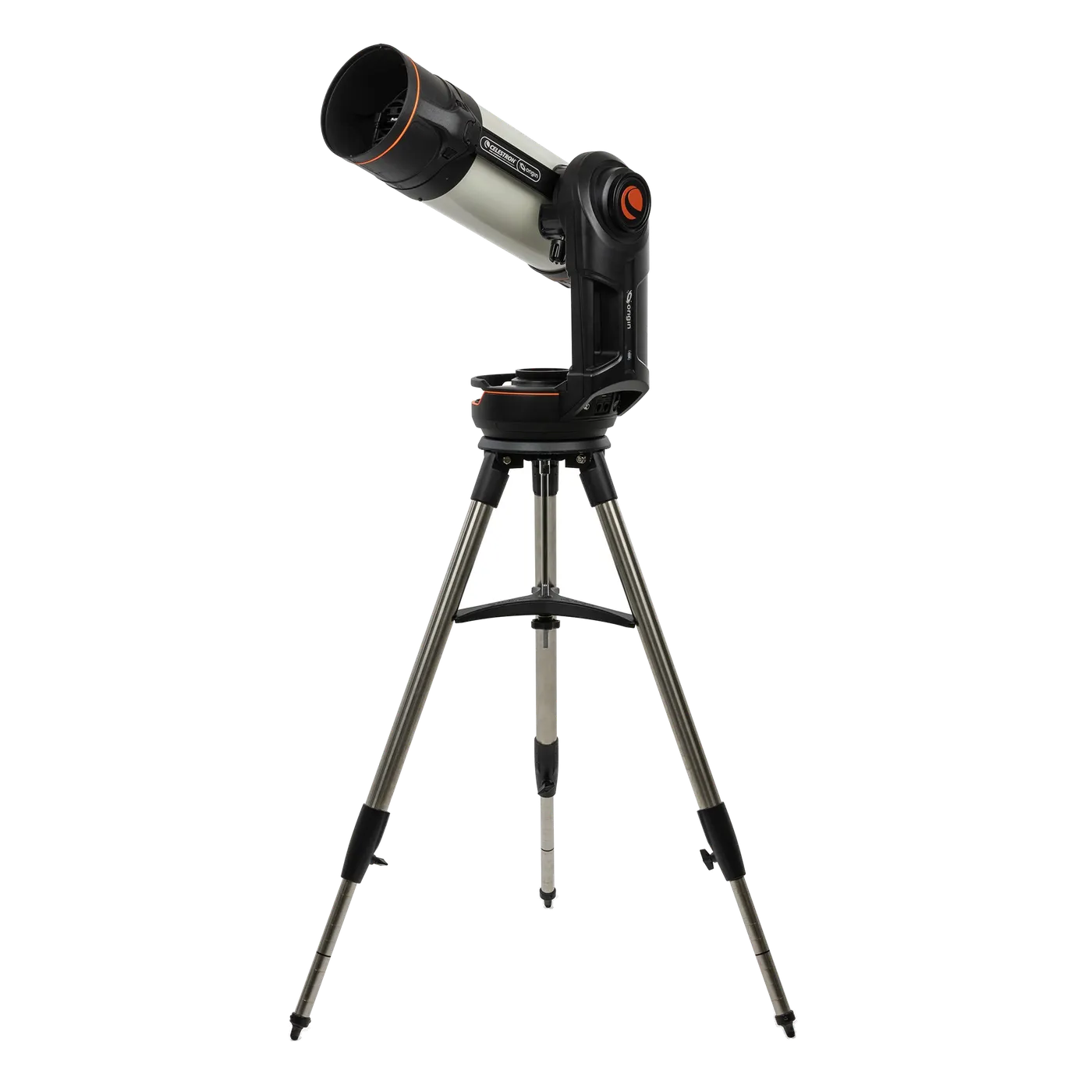
The whole instrument on its tripod, in profile
Rapport d'ouverture : the focal length divided by the diameter, written f/, and the smaller that number, the faster the image forms.
≈ €5,300
Mark II; the original version still findable at ≈ €4,600 in clearance
List price recorded in 2026, excluding promotions and accessories. It is not an offer. The price offered to you arrives in writing.
This device can be ordered from me. No basket and no online payment: the price, the lead time and availability arrive in writing. I have never had it in my hands. That is written further down this entry, and I am not going to tell you otherwise in order to sell it to you.
The device photographs are the manufacturers' official images. UST is an authorised reseller for all five brands. No image comes from a competing reseller.
not tested In this catalogue: no shots at all. Entry built on public sources.
0 · aucune donnée de première main
0 towards 165h · hours I have logged with this device, this is not a rating
It is the fastest in the panel, at f/2,2. It therefore serves as the reference. In 1h it makes an image that takes up to 5h 48m on devices working at f/5,3.
This equivalence says nothing but speed. It says nothing about resolution, about the field, or about optical quality. f/2,2 on 152 mm and f/5,3 on 30 mm do not photograph the same objects. The calculation takes nothing but the published focal ratios, with sensor, sky and target held identical.
- Aperture
- 152 mm
- Focal length
- 335 mm
- Focal ratio
- f/2.2
- Sensor
- Sony IMX178 STARVIS (IMX678 on the Mark II)
- Resolution
- 3,096 × 2,080 px
- Mount
- Motorised altazimuth
- Weight
- 19 kg
- Software
- Celestron Origin (iOS, Android)
- Indicative price
- ≈ €5,300 (Mark II; the original version still findable at ≈ €4,600 in clearance)
Monture azimutale : it moves in altitude and in rotation, but the field turns during the night.
The device
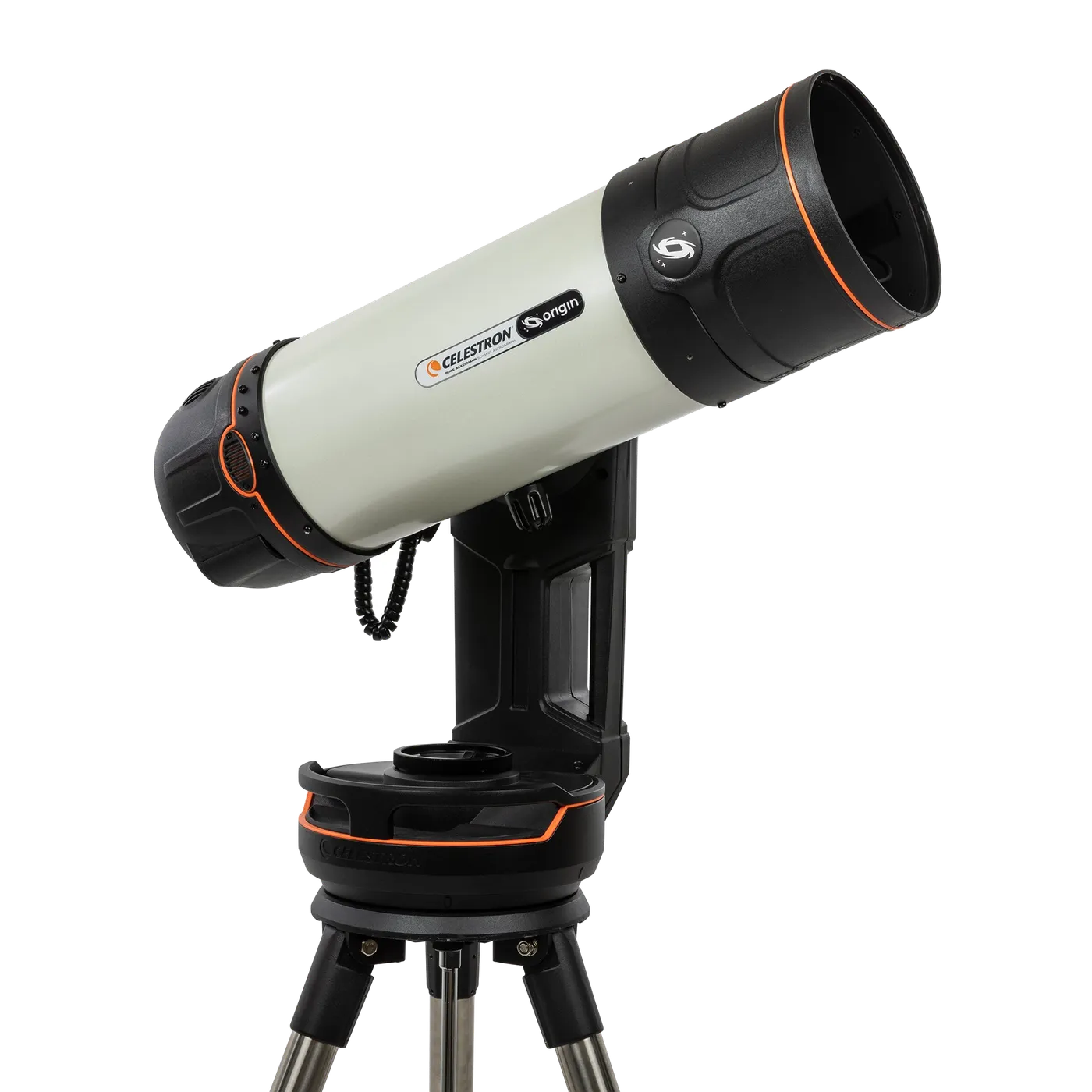
Seen from closer up
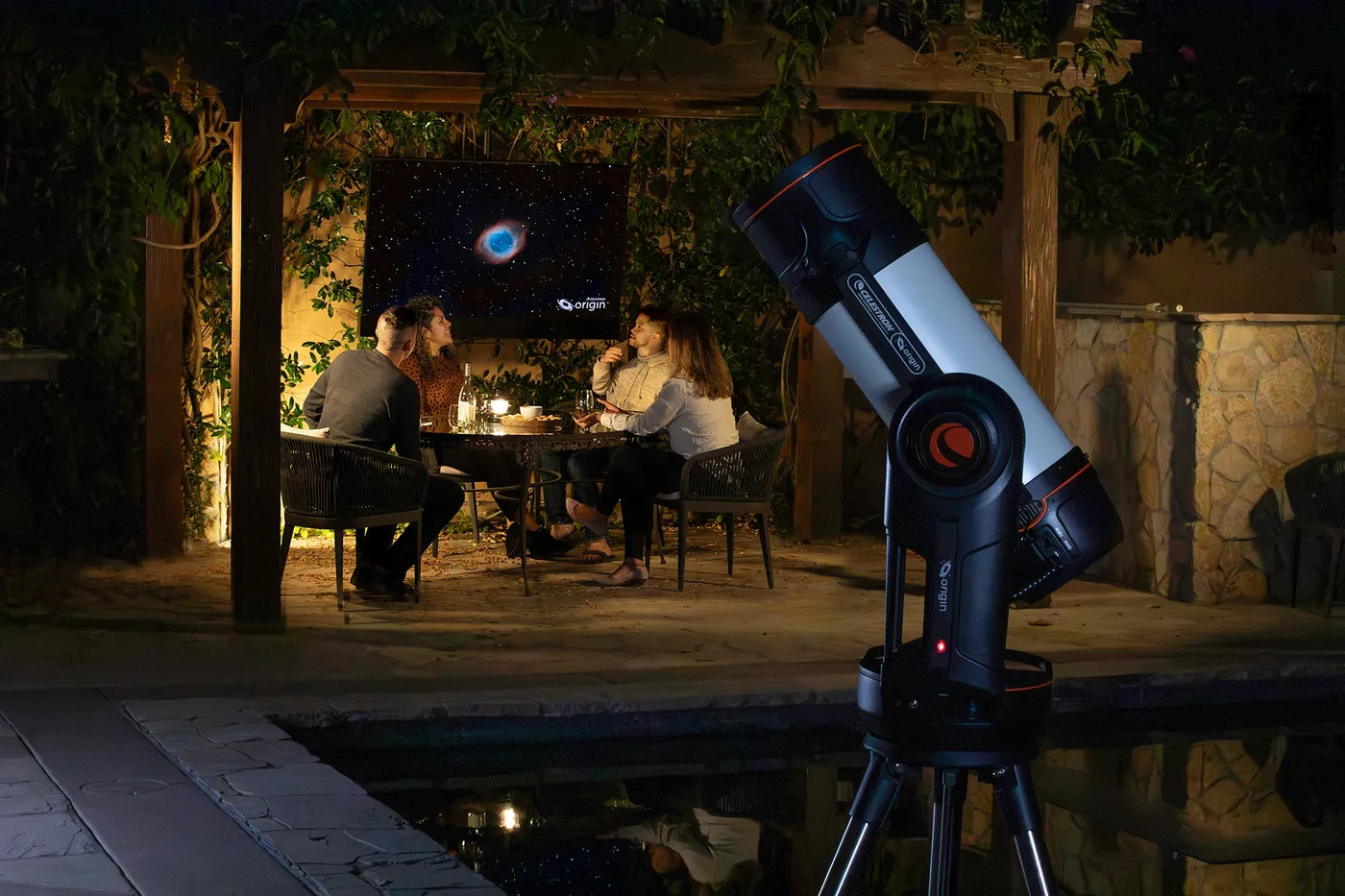
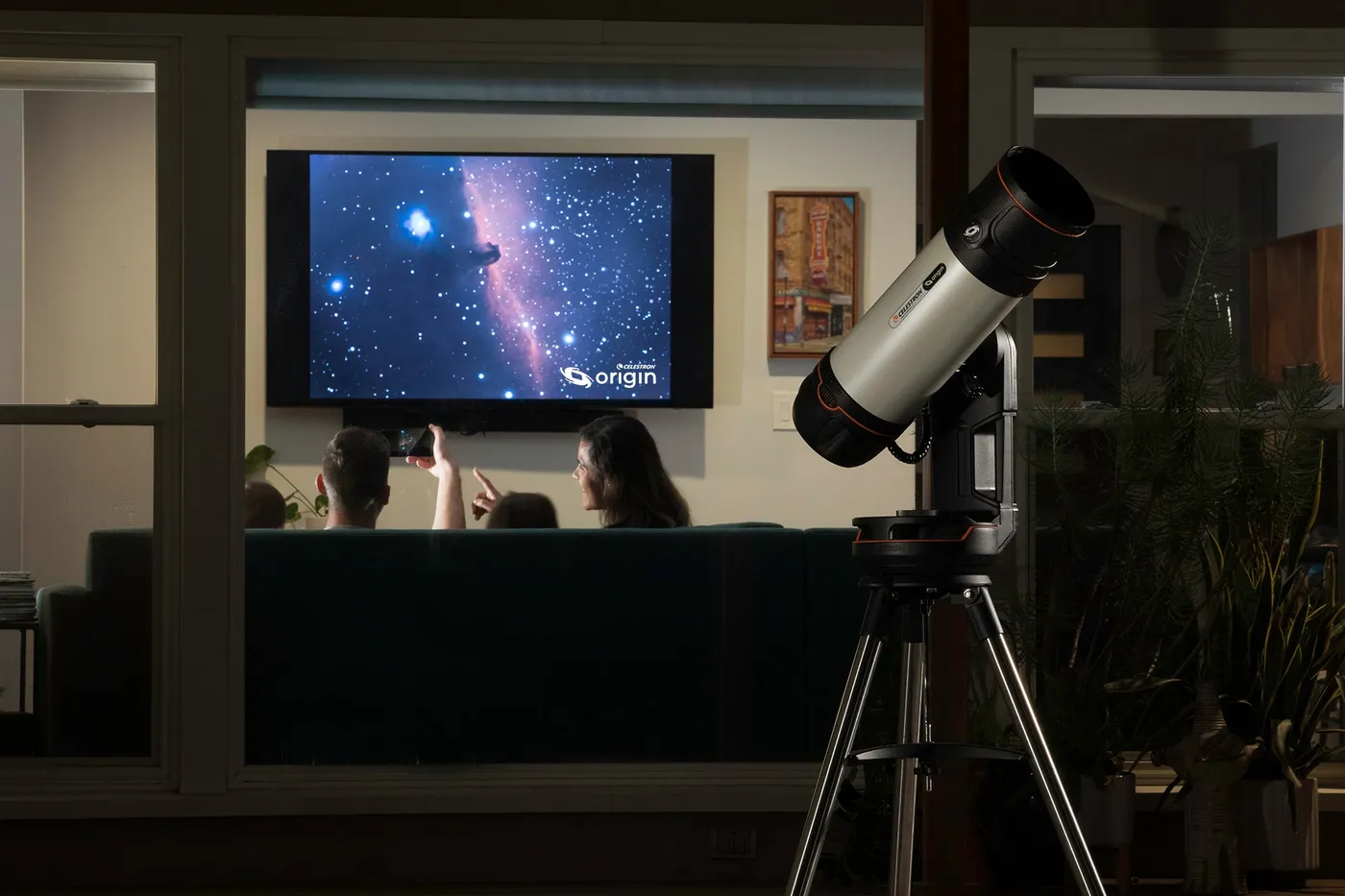
The other images published by Celestron for this device.
Where it excels
What it does well
The fixed post in the garden. At f/2.2, light gathers quickly. It is the device for short evenings under an average sky.
Strong points
- 152 mm at f/2.2: by far the fastest focal ratio of them all.
- It genuinely resolves small objects, which a 30 or a 50 mm cannot do.
- Fully autonomous alignment and focusing, thanks to StarSense.
- Sixty-six years of telescope making behind the product.
Weak points
- 19 kg: this is no longer a device you travel with, it is a garden observatory.
- It costs nearly twice the price of a Vespera Pro. And more than ten times that of a Seestar S50.
- The RASA asks for careful collimation, which means mirrors kept properly aligned. Sealed bodies ask for none.
- It is bulky, and in practice it runs off the mains.
In practice
Starting out, observing, setting up

-
01
At f/2.2, focusing is critical. Redo it at every change of temperature.
-
02
Plan for a permanent installation, or nearly. Setting it up is not a two minute affair.
Images made with this device
No images: it has not been tried
This device has never been used to make one of my images. The photographs above show the device, and they come from the manufacturer. No sky image is borrowed to fill the space. Its entry rests on the published sources, listed further down. Its integration time scale therefore stays at zero.
Temps d'intégration : the total exposure time, the sum of every exposure stacked on an object.
0 images · space left empty
I publish 10 photographs, 2 of which are of equipment. None of them appears on this entry, and that is deliberate: not one of them shows this device, and an image placed there would amount to a claim.
Getting hold of one
Order this Origin
≈ €5,300 (Mark II; the original version still findable at ≈ €4,600 in clearance)
Market price recorded in 2026 from the sources cited below. It is not a selling price, and it does not constitute an offer. Your price, your lead time and availability appear in the written reply.
Say what you want to photograph, and from what sky. The answer says whether this device suits. If not, it says which one suits better. Are you looking for a second-hand one, or do you have a device to trade in? Write it in the message. The answer will be straight, including when it is no.
Sources
Where these figures come from
The prices are indicative and recorded in 2026. A specification wrong or out of date? Report it. The field of view and the sampling are not published here. The physical size of the sensor is not part of the project's sourced data, and those two values cannot be estimated.
Some of these sources are the pages of resellers selling the same device as me. They stay cited: that is where the figure comes from. Removing them would make this entry impossible to check. I refuse to do that.