
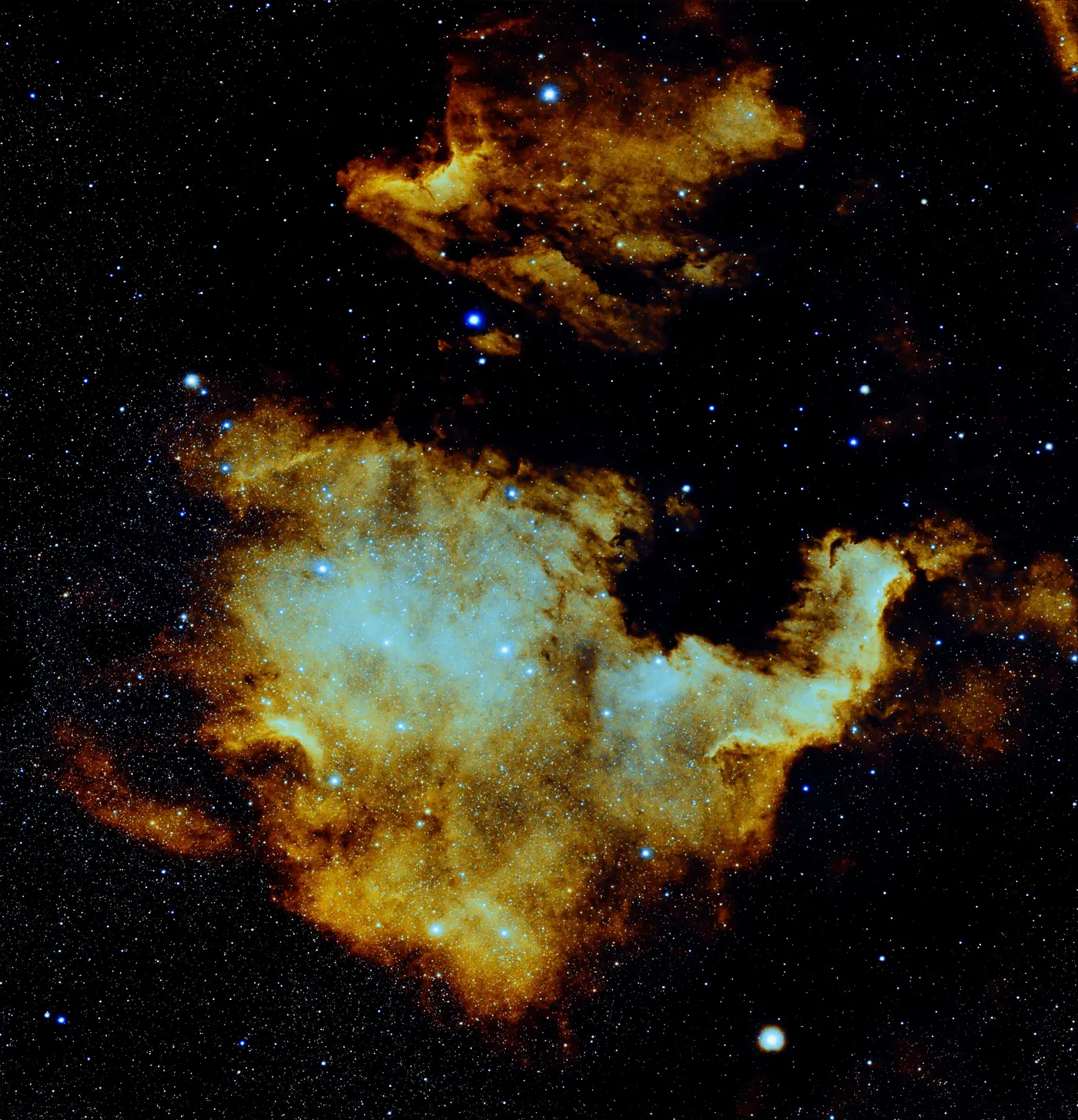
NGC 7000 · IC 5070 · Cygnus
Amérique du Nord et Pélican
22h 12m 3 shots
0 towards 22h 12m · cumulative integration on this object
Nebula · Auriga
Two emission nebulae in Auriga, in the same field.
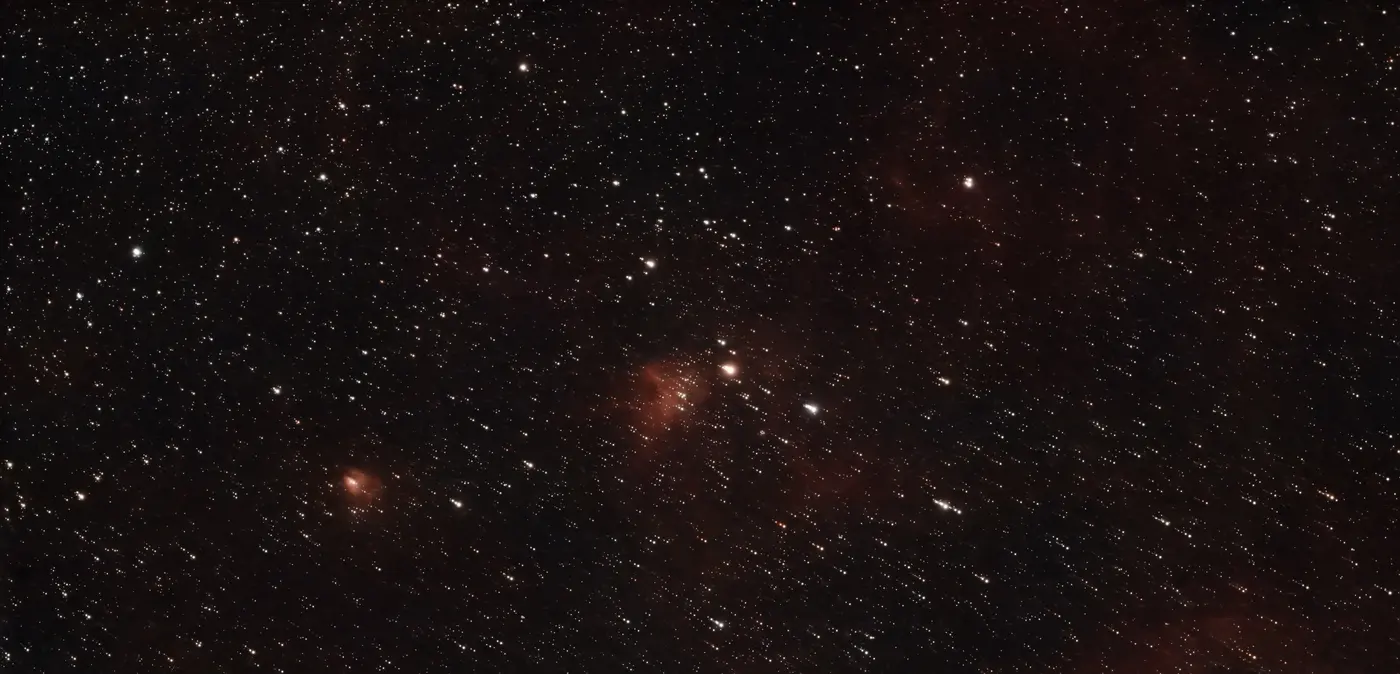
In the catalogue, the thumbnail for this object is cropped in on its subject, so that it can be seen at card size. This view here is the whole photograph, as I produced it.
IC 417 is the large one, called the Spider. NGC 1931 is the small compact one, called the Fly. The Spider surrounds the open cluster Stock 8, whose stars are between one and five million years old. The Fly, about 10,000 light-years away, is only six arcminutes across and shines at magnitude 10.1. The outline of the Spider stays invisible at the eyepiece and only appears in a long exposure. The gap between what you see and what you photograph is among the widest in the catalogue here.
Sources: Wikipédia en français, NGC 1931, Wikipédia en français, IC 417. A figure wrong? Report it.
1h 12m 1 shot
0 towards 22h 12m · cumulative integration on this object
Temps d'intégration : the total exposure time, the sum of every exposure stacked on an object.
Filtre duo-bande : it lets through only the two colours of emission nebulae.
In the same family
NGC 7000 · IC 5070 · Cygnus
22h 12m 3 shots
0 towards 22h 12m · cumulative integration on this object
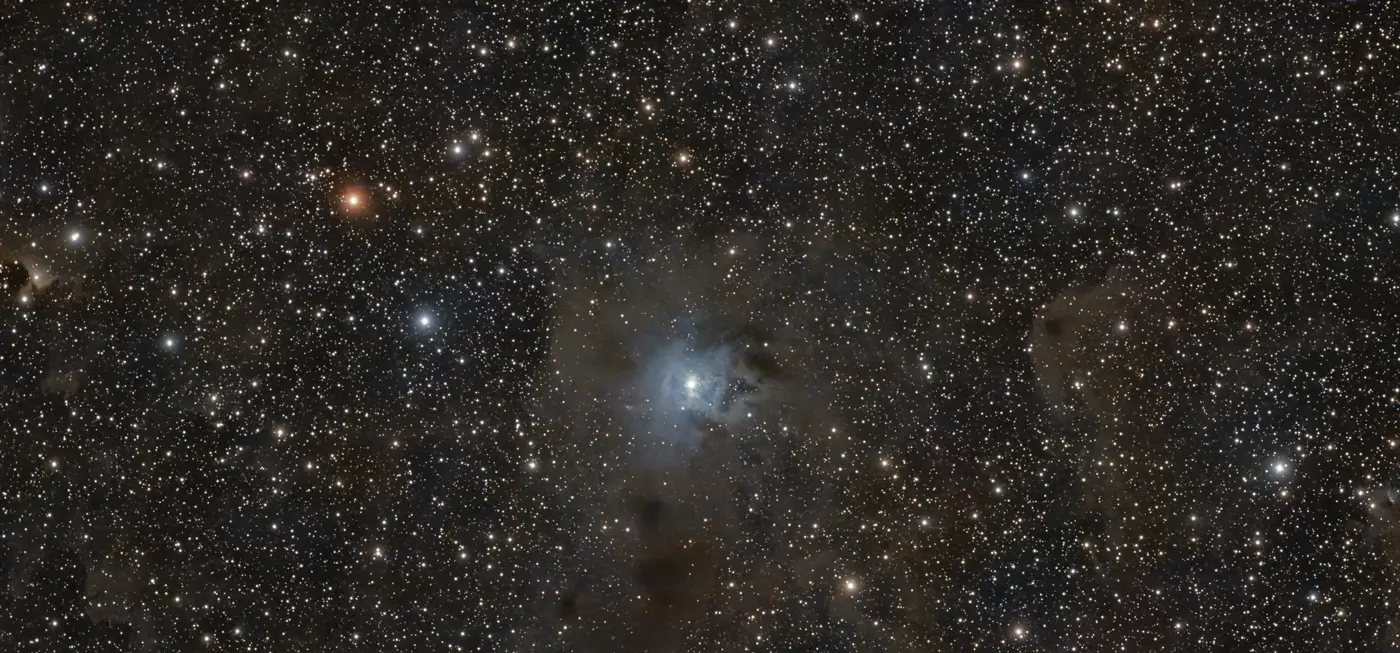
NGC 7023 · Cepheus
11h 34m 4 shots
0 towards 22h 12m · cumulative integration on this object
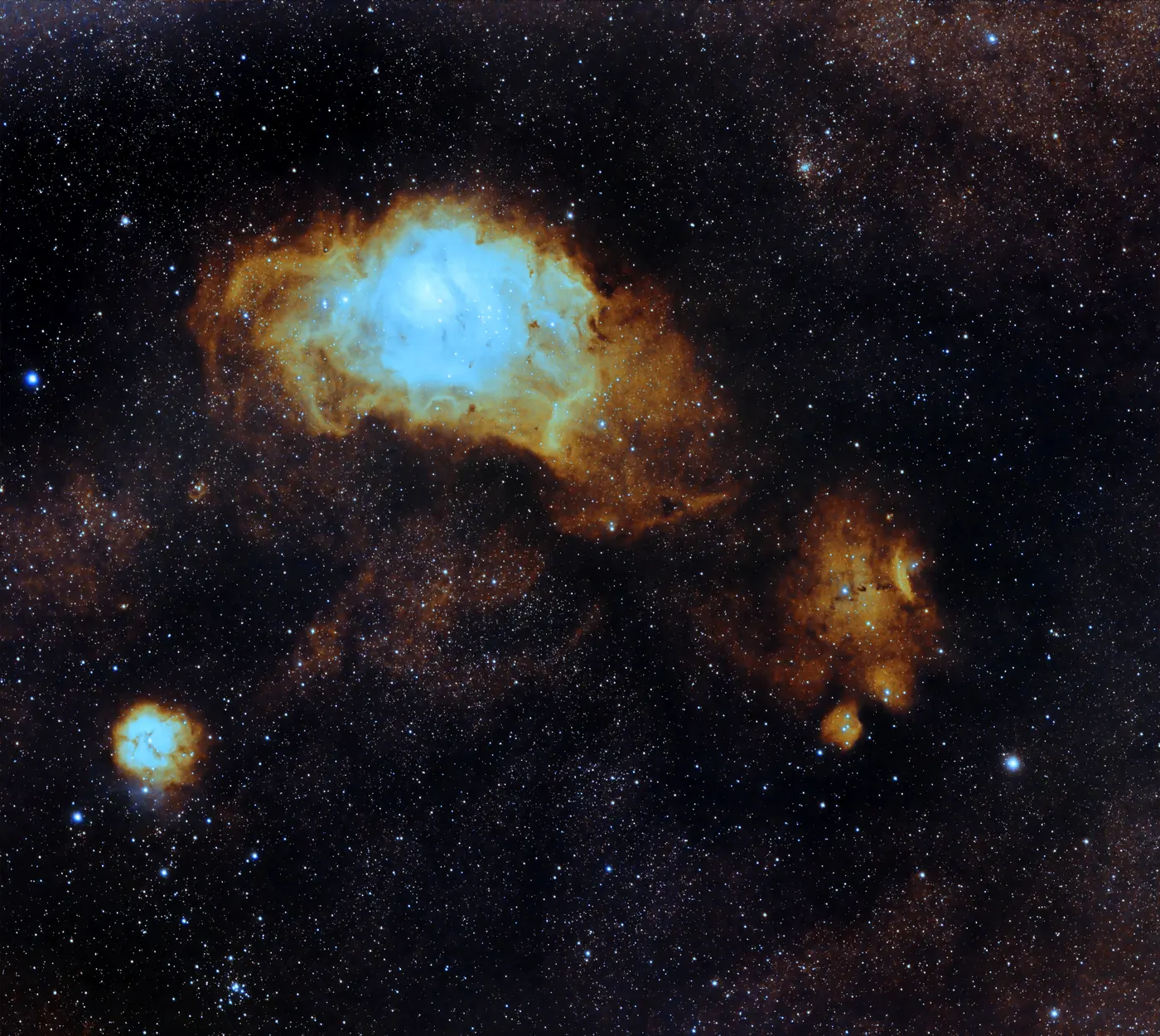
M8 · M20 · Sagittarius
11h 23m 1 shot
0 towards 22h 12m · cumulative integration on this object