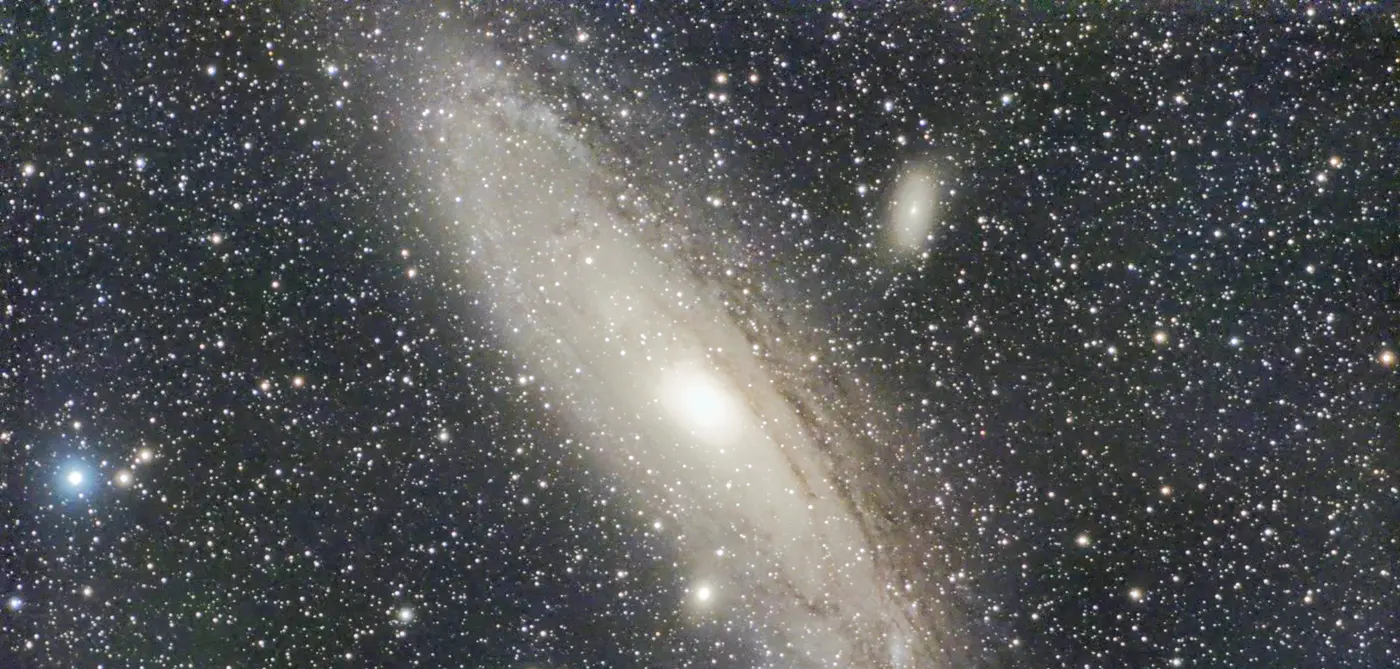
M31 · Andromeda
Galaxie d'Andromède
Visible to the naked eye. Its core appears on the screen in a few minutes, its outer arms take hours: that is the difference between one evening and a catalogue entry.
DwarfLab DWARF 3 · 1 September 2026
Events
I come to schools, town councils, associations and private homes, with my own smart telescopes. No eyepiece: the image builds on a screen, minute after minute, and everybody watches it at the same time. I adapt to the place and to the audience: write and tell me what you have in mind.
For schools
A session in front of one class, or several, by day as well as in the evening. Tell me the age of the pupils and what you want them to take away: I adapt to that.
What I offer
I come with my instruments and I show the sky live, on a screen the whole class watches at the same time. I answer the questions, the pupils' as well as yours.
What you see there
By day, the Sun through a solar filter. Without that filter the sensor is destroyed in seconds, and it is the first thing I explain. In the evening, a nebula or a galaxy building in front of their eyes.
How it is arranged
Write and tell me the class, the place and the period you have in mind. I reply in writing, with questions if your enquiry calls for them.
For town councils
A science festival, a night of the stars, a town event: the sky is watched together, and a smart telescope shows it to a whole group on the same screen.
What I offer
An evening open to the public, with my instruments, at the place you choose. I introduce the objects as they appear, and I answer the questions.
What you see there
The brightest stars in a cluster register in a few seconds. The core of a galaxy appears in a few minutes. Clouds of gas take longer, and that is exactly what the audience watches building.
How it is arranged
Write and tell me the occasion, the place and the audience expected. A celestial event is the natural moment for an evening: an eclipse, a planet at opposition, a meteor shower. I photographed the total solar eclipse of 12 August 2026.
For associations
An astronomy club, an association that wants to give its members an evening: I come with my smart telescopes, either to observe or to present these devices.
What I offer
An observing evening, or a presentation of smart telescopes for members hesitating over buying one. Both, if you like. I sell these devices, and the About page writes it in plain words.
What you see there
What these devices really produce, live. The device finds its own way around the sky, you choose the object from a list, and the image stacks up on the screen. Your members compare it with what they already know.
How it is arranged
Write and tell me the number of members expected, the place and the date you have in mind. If the association already has equipment, say so: we put it side by side.
For private hosts
A birthday, an evening with friends, a garden and guests looking up: I come with my instruments and I show what the eye alone does not see.
What I offer
An observing evening at your place, in the garden or on the terrace, with my own devices. I take care of the setting up and the explaining.
What you see there
A galaxy whose core appears in a few minutes, a nebula building on the screen, and Jupiter, brilliant and tiny, if it is up that night.
How it is arranged
Tell me the date you have in mind, the place and the number of guests. I adapt to the place as much as to the numbers.
What I show
Every astrophotograph on this site is mine, made with the three instruments I have in hand, a Unistellar eQuinox 2, a DwarfLab DWARF 3 and a Vaonis Vespera Pro. Here are three of them. The catalogue holds 41 entries, and each one carries the device, the date and the exposure time: an evening shows what the catalogue tells.
M31 · Andromeda
Visible to the naked eye. Its core appears on the screen in a few minutes, its outer arms take hours: that is the difference between one evening and a catalogue entry.
DwarfLab DWARF 3 · 1 September 2026
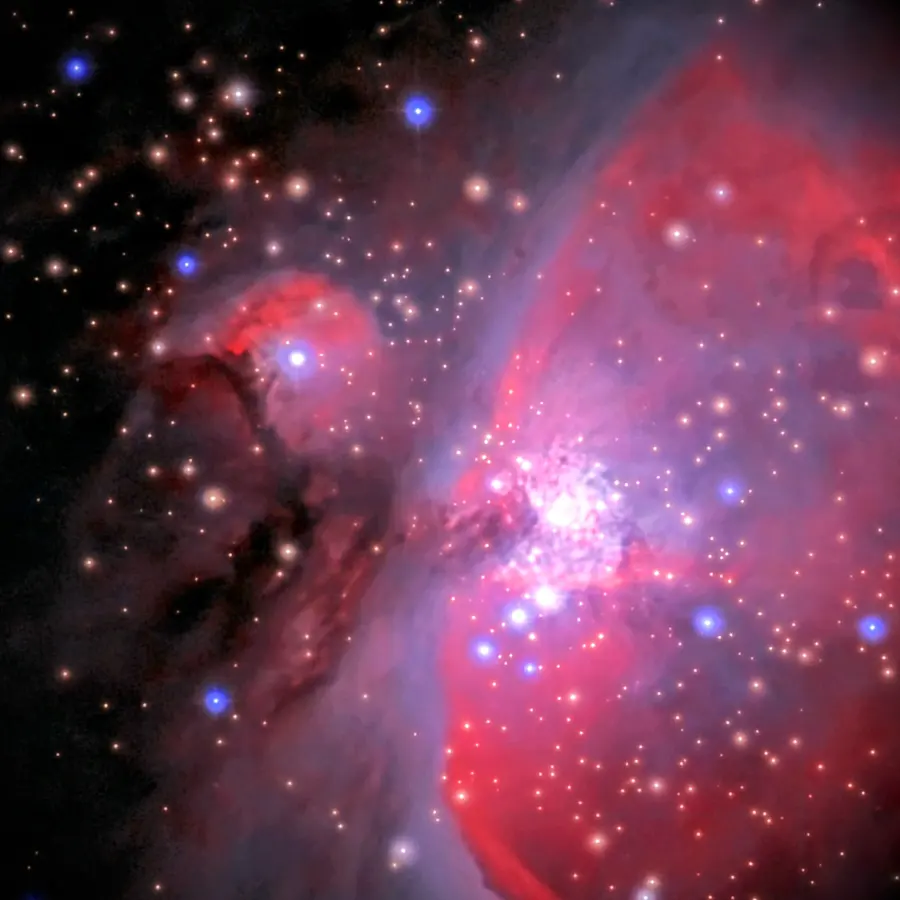
M42 · Orion
Visible to the naked eye, just below Orion's belt. Its centre saturates in a few seconds, its outer extensions take hours.
Unistellar eQuinox 2 · 4 November 2024
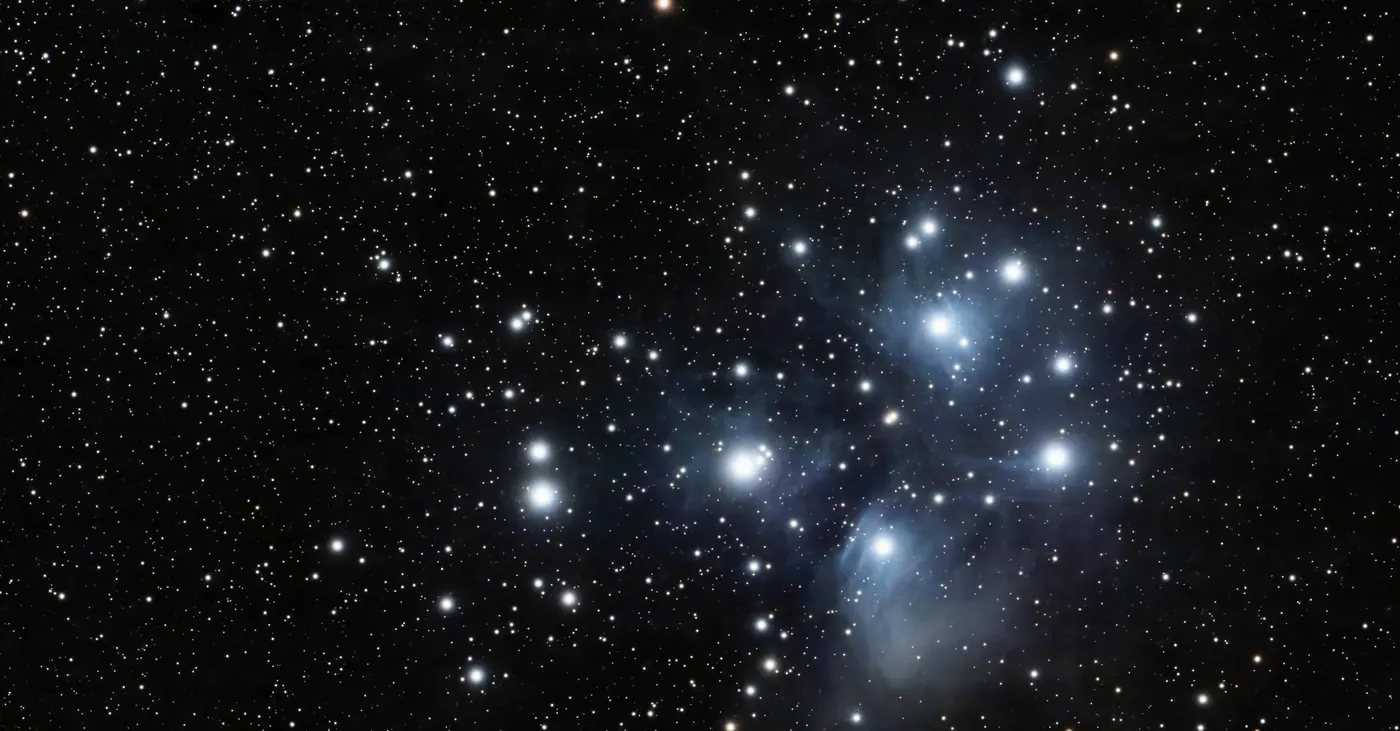
M45 · Taurus
Visible to the naked eye under a decent sky. Its brightest stars register in a few seconds. The blue nebulosity wrapped around them is far fainter, and it is that which time brings out.
DwarfLab DWARF 3 · 20 September 2025
Your enquiry
The audience, the place, the period, what you are expecting. I reply in writing.