
Planet
Jupiter
The largest planet in the solar system: eleven times the diameter of Earth.
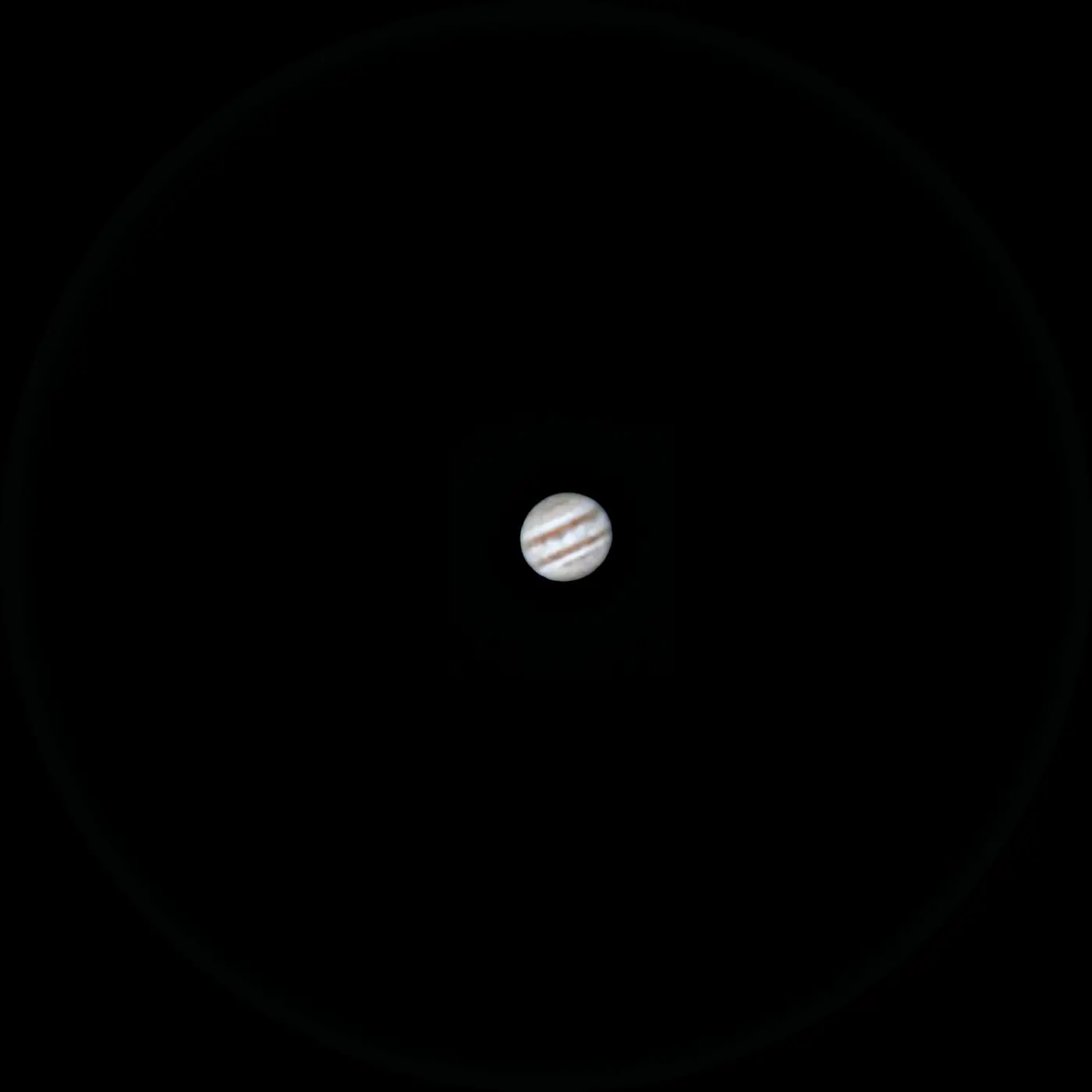
In the catalogue, the thumbnail for this object is cropped in on its subject, so that it can be seen at card size. This view here is the whole photograph, as I produced it.
It is 5.2 astronomical units from the Sun, and the International Astronomical Union recognises 95 moons for it. Its Great Red Spot is a vortex twice as wide as Earth, observed for more than three hundred years. The planet turns on itself in 9.9 hours. It is the exact opposite of the deep sky: Jupiter is bright and tiny. It asks for focal length and a steady sky, not hours of exposure. That is why this entry shows no cumulative exposure time.
Source: NASA, Jupiter, faits. A figure wrong? Report it.
exposure not logged 1 shot
0 towards 22h 12m · cumulative integration on this object
Temps d'intégration : the total exposure time, the sum of every exposure stacked on an object.
- Designation
- Jupiter
- Family
- Planet
- Constellation
- no fixed constellation
- Shots taken
- 1
- Cumulative integration
- not logged
- Instrument
- Unistellar eQuinox 2