
DwarfLab · China
DwarfLab Draco
90 mm in a 5.5 kg body, with a sensor that turns on itself to cancel out the rotation of the sky. DwarfLab leaves the small format behind and aims at the portable observatory.
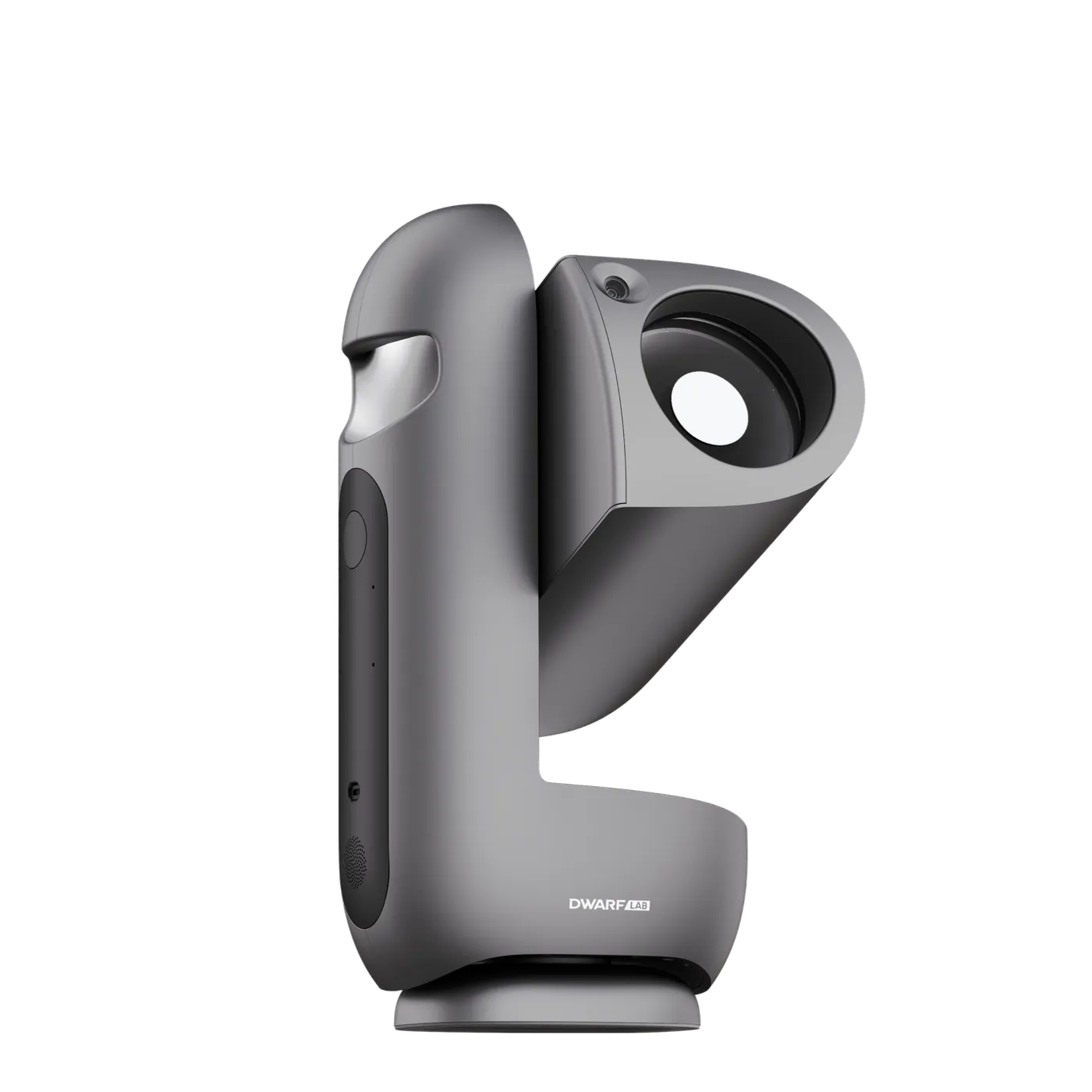
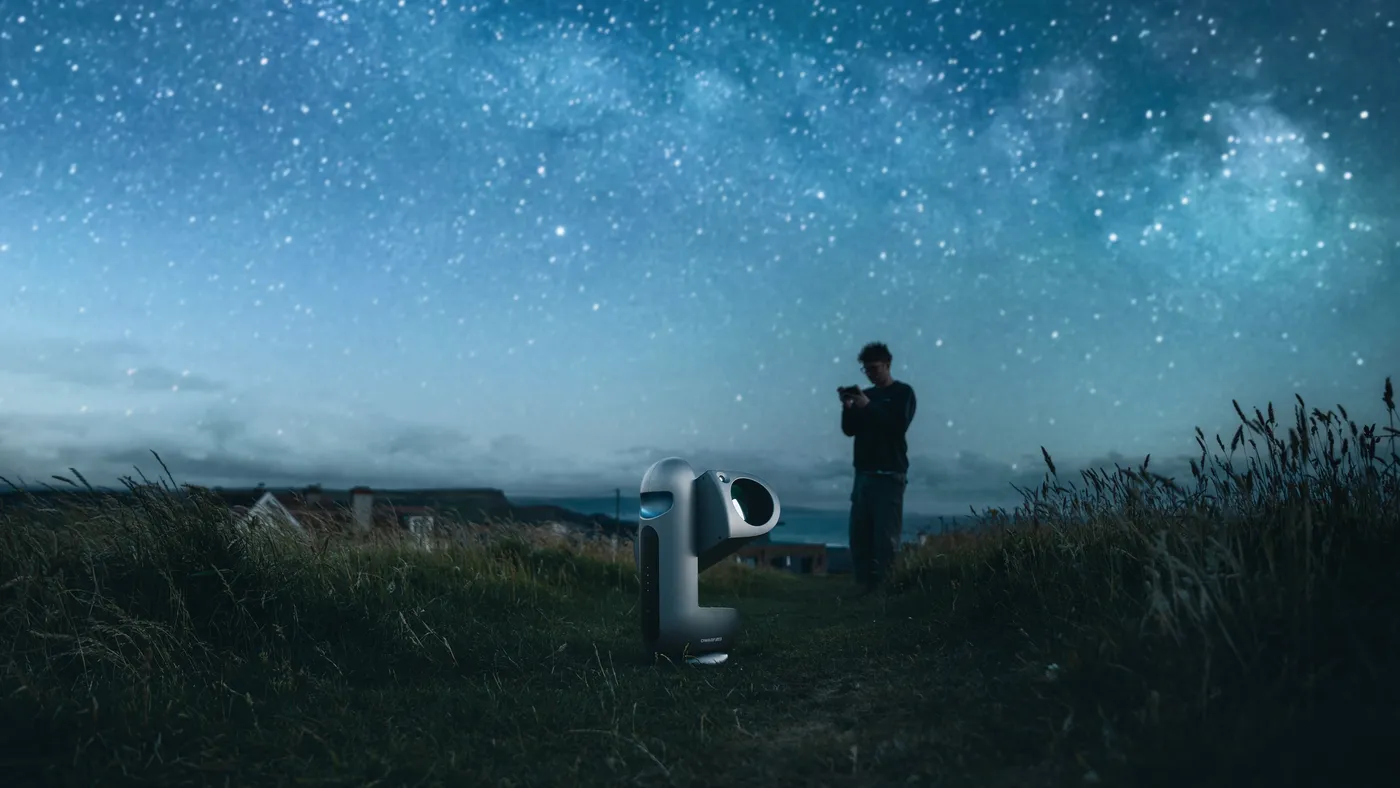
The instrument on its own, at three-quarters, with no tripod
≈ €1,669
SHO edition, the only one available · standard edition ≈ €1,499, sold out as recorded on 14 September 2026
List price recorded in 2026, excluding promotions and accessories. It is not an offer. The price offered to you arrives in writing.
This device can be ordered from me. No basket and no online payment: the price, the lead time and availability arrive in writing. I have never had it in my hands. That is written further down this entry, and I am not going to tell you otherwise in order to sell it to you.
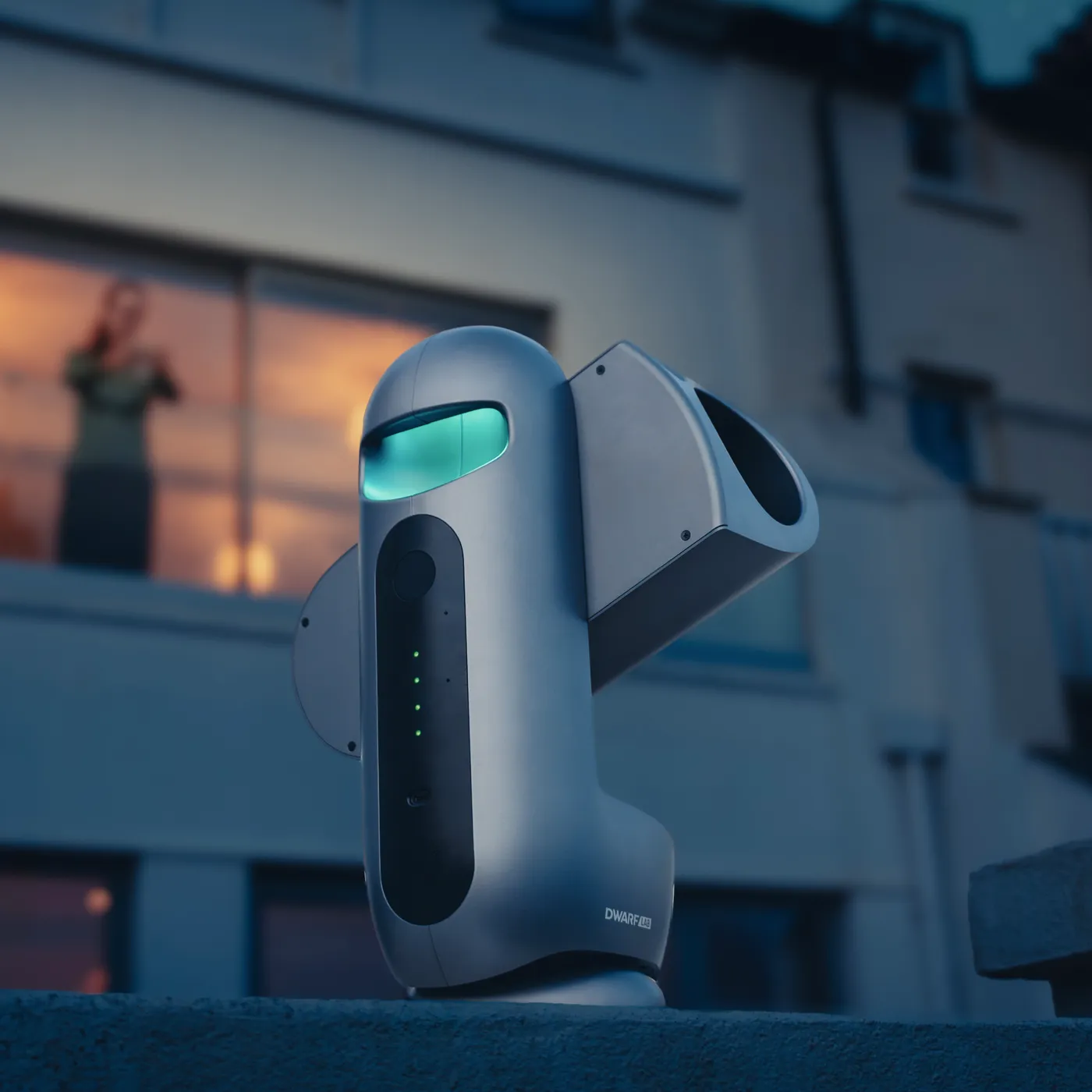
The device photographs are the manufacturers' official images. UST is an authorised reseller for all five brands. No image comes from a competing reseller.
not tested In this catalogue: no shots at all. Entry built on public sources.
0 · aucune donnée de première main
0 towards 165h · hours I have logged with this device, this is not a rating
For the image the l'Origin makes in 1h, it takes 2h 59m here.
This equivalence says nothing but speed. It says nothing about resolution, about the field, or about optical quality. f/2,2 on 152 mm and f/3,8 on 90 mm do not photograph the same objects. The calculation takes nothing but the published focal ratios, with sensor, sky and target held identical.
Rapport d'ouverture : the focal length divided by the diameter, written f/, and the smaller that number, the faster the image forms.
- Aperture
- 90 mm (telephoto) · 2.96 mm (wide angle)
- Focal length
- 340 mm (telephoto) · 5.56 mm (wide angle)
- Focal ratio
- f/3.8
- Sensor
- OmniVision OV50Q40 (telephoto, 1/1.3 inch) · OV50E40 (wide angle) · OS04C1B monochrome (guiding)
- Resolution
- 12 Mpx output, by 2 × 2 binning on a 50.33 Mpx sensor
- Mount
- Altazimuth with field derotator, equatorial mode supported
- Weight
- 5.5 kg
- Software
- DWARFLAB (iOS, Android)
- Indicative price
- ≈ €1,669 (SHO edition, the only one available · standard edition ≈ €1,499, sold out as recorded on 14 September 2026)
Monture azimutale : it moves in altitude and in rotation, but the field turns during the night. Monture équatoriale : one axis set on that of the Earth, so that the field no longer turns.
The device
Seen from closer up
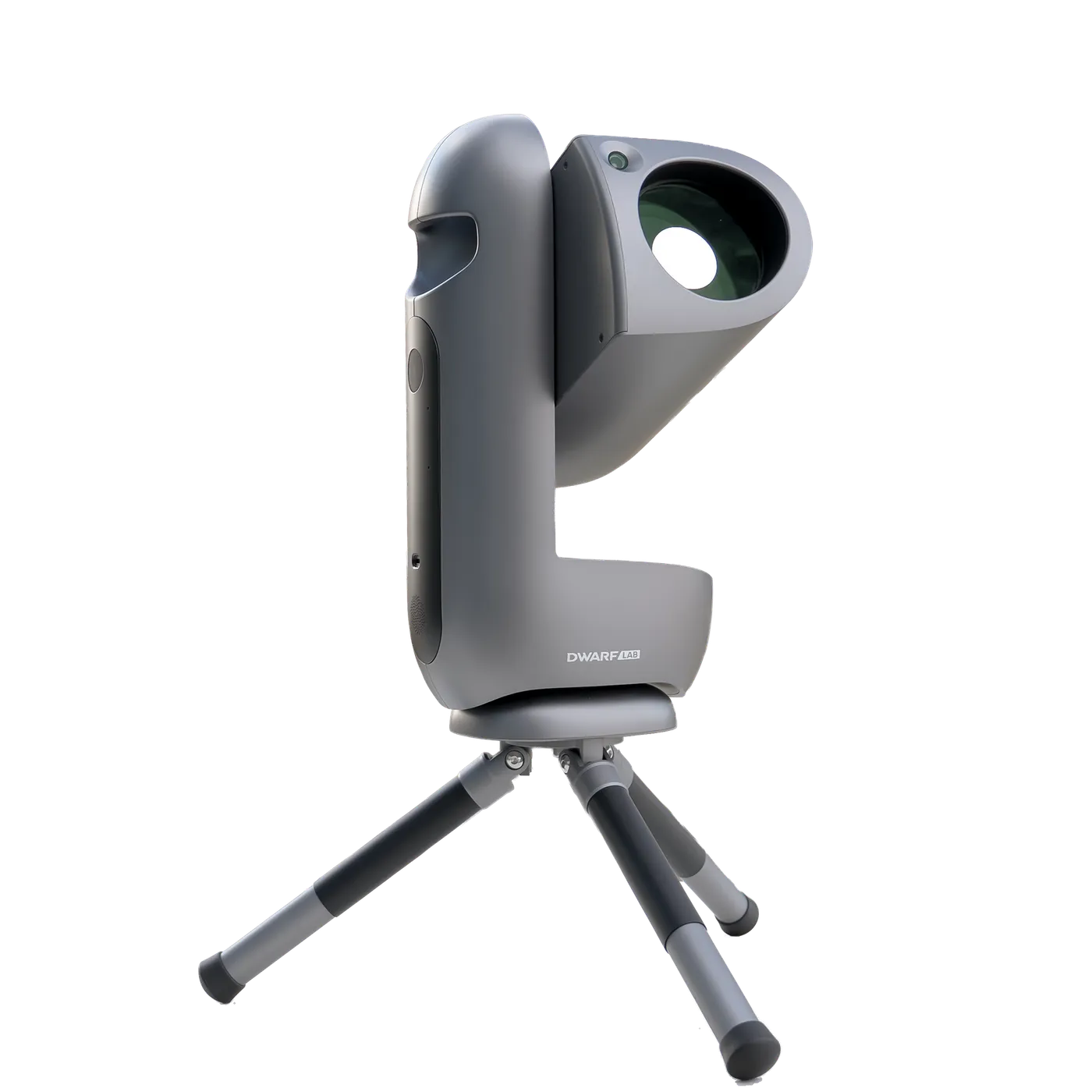
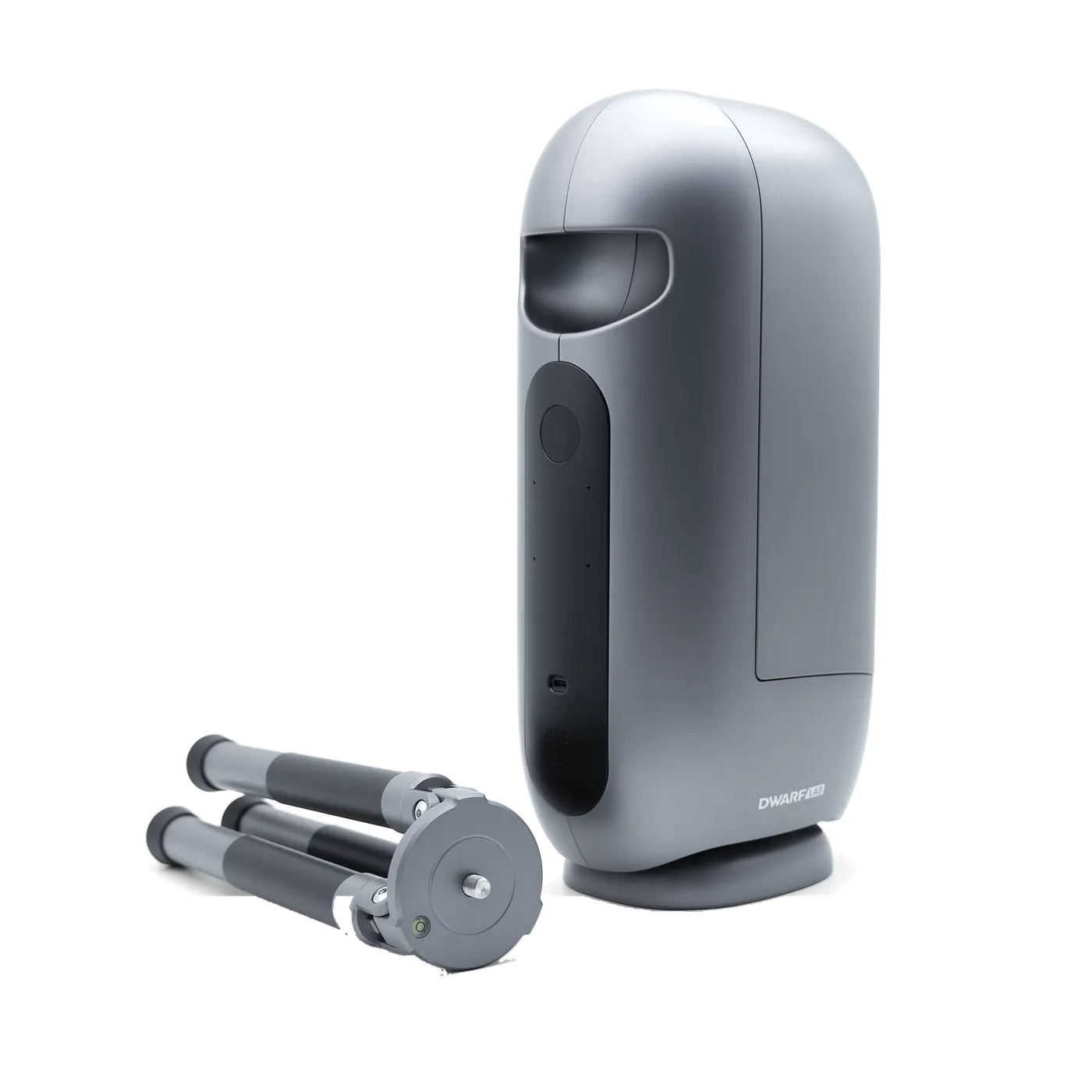
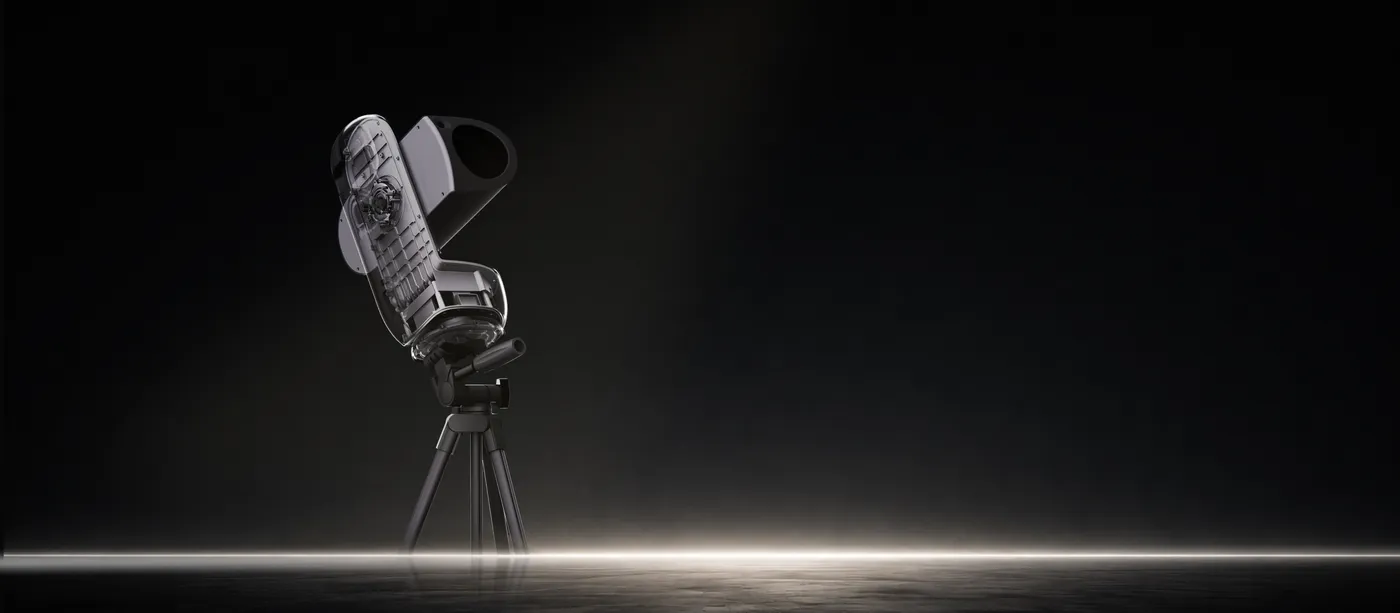
The other images published by DwarfLab for this device.
Where it excels
What it does well
The demanding deep sky without polar alignment. The field derotator does the work that used to be asked of an equatorial mount.
Strong points
- 90 mm of aperture: after Celestron's Origin, the largest diameter of the devices compared here.
- f/3.8, and it is DwarfLab that writes it: after the Origin, the fastest ratio in the panel. So it gathers light more quickly.
- A field derotator, quoted at between 0.001 and 12.83 degrees per second. Neither the DWARF 3 nor the DWARF mini has one: their entry carries the word none.
- Sub-exposures up to 300 s, against 60 s on the DWARF 3.
- Dual-band filter narrowed to 13 nm on each line, against 20 and 12 nm on the DWARF 3.
- The SHO edition adds a second dual-band filter for sulphur and oxygen, and runs through both filters on its own to compose an image in the Hubble palette.
- Ethernet over USB and remote control: it will let itself be set up under a better sky than its owner's.
Weak points
- 5.5 kg: this is no longer the rucksack format of the other DwarfLabs. The DWARF 3 weighs 1.35 kg.
- It costs about three times the price of a DWARF 3.
- The sensor holds 50.33 Mpx but delivers only 12 on the deep sky, by grouping the pixels four by four.
- Five hours of battery only, against eleven on the Vespera 3 and nine on the Seestar S50 Pro.
- The standard edition was sold out when recorded on 14/09/2026, and the SHO edition is sold on pre-order.
- DwarfLab quotes shipping within three months of the order. No real image from use exists yet.
In practice
Starting out, observing, setting up
-
01
The focal ratio printed here is the one DwarfLab publishes: its datasheet carries a section headed “Ultra fast focal ratio f/3.8”. The calculation on the published 90 mm and 340 mm lands on it. It is not inferred.
-
02
Two editions, one single body. The standard edition carries an internal neutral filter for the Sun; the SHO edition replaces it with a second dual-band filter and supplies the neutral filter separately, to be fitted by hand. The wide angle, for its part, keeps its internal neutral filter on both editions.
-
03
The body comes in several finishes in the manufacturer's images. A caption must not describe its colour.
-
04
The tripod supplied weighs 480 g and stands 175 mm high. It is a table tripod, not a field tripod. DwarfLab writes itself that the tripod shown in its images is for illustration only.
-
05
The contents of the box are contradictory at the manufacturer's end: the purchase block announces a case and the external neutral filter, the section headed “what is in the box” lists only the device, the tripod, the USB-C cable and a cloth. To be confirmed at the order.
-
06
DwarfLab also publishes a mosaic: the frame extends up to 1.8 times in width as in height, for an overall field about three times larger. The manufacturer does not publish its value in degrees, and I do not calculate it.
Images made with this device
No images: it has not been tried
This device has never been used to make one of my images. The photographs above show the device, and they come from the manufacturer. No sky image is borrowed to fill the space. Its entry rests on the published sources, listed further down. Its integration time scale therefore stays at zero.
Temps d'intégration : the total exposure time, the sum of every exposure stacked on an object.
0 images · space left empty
I publish 10 photographs, 2 of which are of equipment. None of them appears on this entry, and that is deliberate: not one of them shows this device, and an image placed there would amount to a claim.
Getting hold of one
Order this Draco
≈ €1,669 (SHO edition, the only one available · standard edition ≈ €1,499, sold out as recorded on 14 September 2026)
Market price recorded in 2026 from the sources cited below. It is not a selling price, and it does not constitute an offer. Your price, your lead time and availability appear in the written reply.
Say what you want to photograph, and from what sky. The answer says whether this device suits. If not, it says which one suits better. Are you looking for a second-hand one, or do you have a device to trade in? Write it in the message. The answer will be straight, including when it is no.
Sources
Where these figures come from
The prices are indicative and recorded in 2026. A specification wrong or out of date? Report it. The field of view and the sampling are not published here. The physical size of the sensor is not part of the project's sourced data, and those two values cannot be estimated.